Industry
3D scanning for medical devices and healthcare
Capture patients quickly and comfortably for custom fit, and measure small, complex device parts precisely, often without touching or marking them.
Key takeaways
- White-light scanners such as the Artec Eva capture people without contact or targets.
- The Artec Micro II measures small device components at 5 microns, automatically and in color.
- The Artec Spider II captures fine detail for models and custom fit without targets.
- Creaform's blue-laser scanners bring accredited accuracy to small, complex metal parts.
Where does measurement slow medical device and healthcare work down?
Medical scanning follows two workflows. In clinics and orthotic and prosthetic labs, custom fit is slow when it starts with plaster casts and hand measurements, and every refit costs the patient another visit. At device makers, small, complex components with tight tolerances are hard to measure by touch and must not be marked, while surgical and anatomical models need accurate, detailed geometry in color. 3D scanning changes both: a white-light scanner captures a limb or a face in a short, contact-free scan, a desktop scanner measures small device components automatically, and both feed CAD for prosthetics, orthotics, device design and models.
To compare the scanners we recommend for scanning patients, ranked, see Best 3D scanner for scanning people and medical work.
Typical applications
Custom prosthetics and orthotics
Scan a limb or torso in a short, contact-free session and design the device to fit in CAD.
Device components and tooling
Capture small device parts, molds and tooling as accurate geometry for CAD work and reverse engineering.
Surgical and anatomical models
Digitize models in color and fine detail for planning, teaching and communication.
Device inspection
Measure small, complex device parts against CAD without touching or marking them.
What do we scan for medical device and healthcare teams?
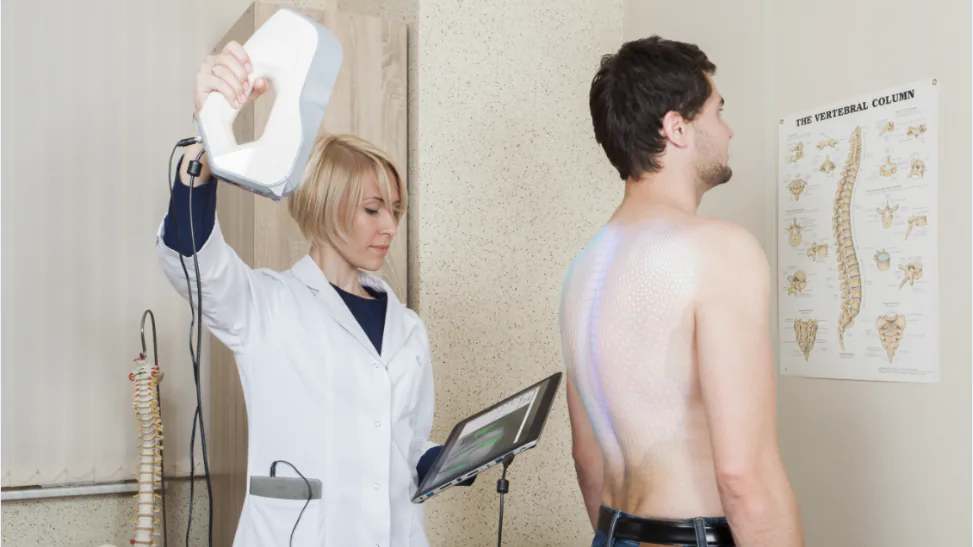
Two very different things. On the patient side: limbs, feet, torsos, faces and heads, captured in a short, contact-free scan as the starting point for orthotics, prosthetics and custom fit. On the device side: small machined and molded components, dental items, the molds and tooling that make them, and anatomical models used for planning and teaching. The table shows what is usually measured or built from each scan and which scanner class suits it. We describe what is scanned; clinical decisions stay with your clinicians and your own procedures.
| What we scan | What is checked or rebuilt | Scanner class that suits it |
|---|---|---|
| Limbs, feet and torsos | Shape for orthotics, prosthetics and braces | White-light structured-light handheldEva, Leo |
| Faces and heads | Shape and color for custom-fit devices | White-light handheld with colorEva, Go!SCAN SPARK |
| Small device components | Dimensions against CAD, without touching the part | Automated desktop scannerMicro II |
| Dental items and small models | Fine detail and color | Desktop or high-resolution handheldMicro II, Spider II |
| Machined device parts and tooling | Toleranced features and tool wear | Metrology laser handheldHandySCAN BLACK Elite, HandySCAN EVO |
| Anatomical and surgical models | Detail and color for planning and teaching | High-resolution structured-light handheldSpider II, Eva |
What we scan for medical devices and healthcare
Limbs, feet and torsos
- What is checked or rebuilt
- Shape for orthotics, prosthetics and braces
Faces and heads
- What is checked or rebuilt
- Shape and color for custom-fit devices
- Scanner class that suits it
- White-light handheld with colorEva, Go!SCAN SPARK
Small device components
- What is checked or rebuilt
- Dimensions against CAD, without touching the part
- Scanner class that suits it
- Automated desktop scannerMicro II
Dental items and small models
- What is checked or rebuilt
- Fine detail and color
Machined device parts and tooling
- What is checked or rebuilt
- Toleranced features and tool wear
- Scanner class that suits it
- Metrology laser handheldHandySCAN BLACK Elite, HandySCAN EVO
Anatomical and surgical models
- What is checked or rebuilt
- Detail and color for planning and teaching
Which medical surfaces and materials scan well?
Skin, plaster casts, foam impressions and printed models are friendly surfaces for structured-light scanners, which track on shape and color with nothing stuck to them. Device materials vary more. Matte plastics and bead-blasted metals usually scan as they are; polished stainless instruments and mirror-finished components reflect light and may need a light coat of scan spray where the part allows it, or a test on a sample. Clear plastic housings and tubing let light through and usually need the same treatment.
Skin and hair
Skin scans well with white or infrared structured light. Hair scans poorly with most structured light, so a cap or a smooth pass over the area that matters helps.
Casts, foam impressions and printed models
Matte and evenly colored, they are among the easiest objects to scan in shape and color.
Matte plastics and blasted metals
Molded housings and bead-blasted parts usually need no preparation at all.
Polished steel and clear plastics
Mirror finishes reflect and clear parts let light through. A thin coat of removable scan spray is the usual workaround, where the part allows it.
Which medical jobs do we scan most often?
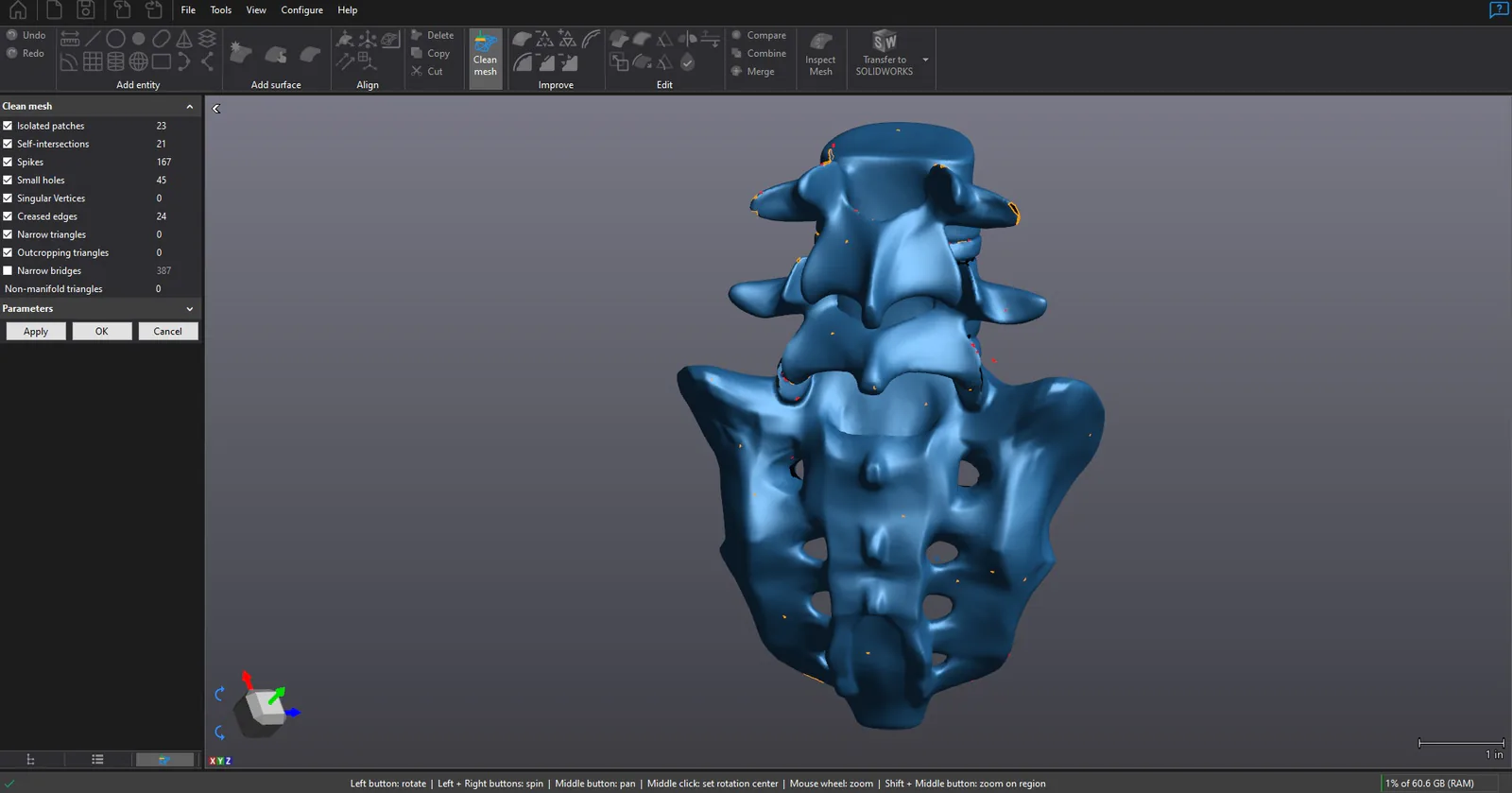
Four: capturing a limb or torso for an orthotic or prosthetic, capturing a face or head for a custom-fit device, measuring small device components against CAD, and digitizing anatomical models in color. The first two need speed and comfort; the last two need detail and repeatability. That is why many medical teams end up with a white-light handheld for people and a desktop or high-resolution scanner for parts.
Orthotic and prosthetic fitting
Scan the limb or residual limb in one short pass, then design the device in CAD from the mesh.
Custom-fit devices for the head
Capture a face or head in shape and color for masks, helmets and other custom-fit devices.
Small component checks
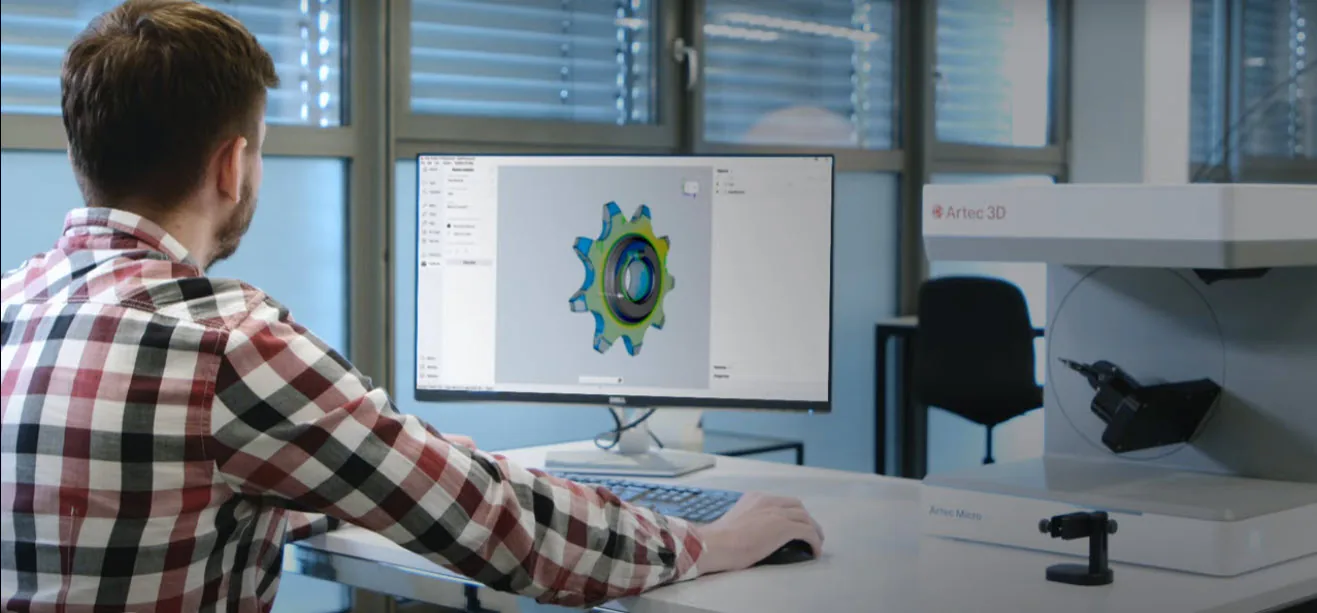
Measure molded or machined components on an automated stage and compare them with CAD, the same way every time.
Anatomical models
Digitize printed or cast models in fine detail and color for planning, teaching and patient conversations.
Where does Creaform fit in medical device work?
Creaform's strength here is high accuracy on small, complex parts. The HandySCAN BLACK Elite and EVO are metrology-grade blue-laser scanners with accredited accuracy, and Creaform publishes their feature limits: 0.750 mm pins, 1.250 mm holes and 0.500 mm walls at their working distance. That suits machined device components and tooling. The Go!SCAN SPARK uses white light and records color, and Creaform lists medical work among its industries, which suits scanning anatomical models. Creaform's Inspection module compares scans with CAD and produces inspection reports.
Creaform products named here:
Where does Artec fit in medical device work?
Artec's strength is color and high detail, on people and on small parts. The Eva projects white light that Artec states is safe for people, needs no targets and captures quickly, which is why it is used for orthotics, prosthetics and medical device fitting. The Spider II captures fine detail in color for models and custom fit, without touching the part. The Micro II measures small medical components and dental items at 5 microns on an automated stage, with 2-micron repeatability, so results do not depend on the operator. All three run in Artec Studio.
Artec products named here:
Which scanners are best for medical devices and healthcare?
For medical devices and healthcare, these four scanners are the strongest fits across the Creaform and Artec ranges: Eva, Micro II, Spider II and HandySCAN BLACK Elite. Each card says why it fits and shows one headline fact taken from the maker's published specifications. They are not ranked against each other, because the right choice depends on the size of what you scan, the accuracy you need and your surfaces. Compare them side by side in the table, then see the one you favor scan your own work before you decide.
Artec
Eva
Handheld structured-light 3D scanner
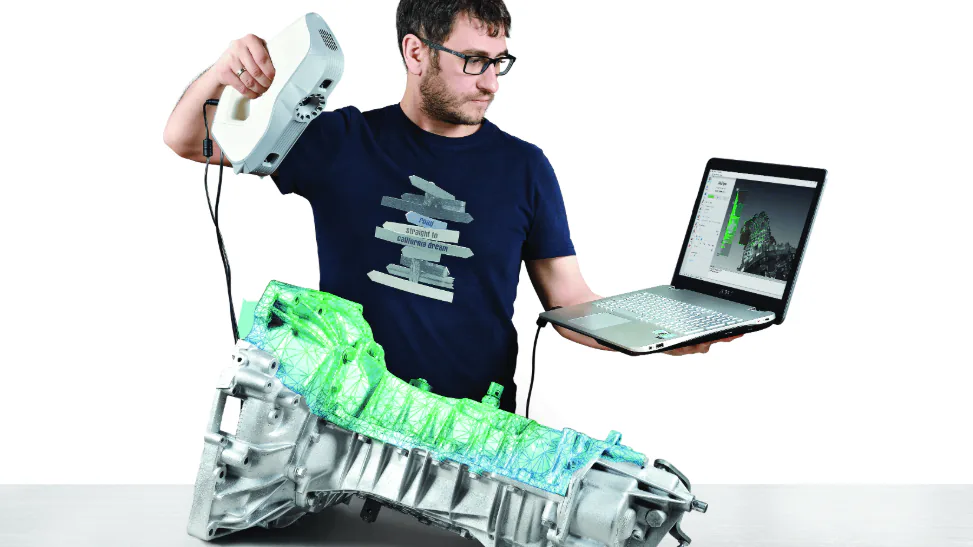
White-light capture of people, which Artec states is safe, for orthotics, prosthetics and custom fit, with no targets on the skin.
- Accuracy
- Up to 0.1 mm
Artec
Micro II
Automated desktop 3D scanner
Automated, repeatable measurement of small device components and dental items, in color.
- Accuracy
- 5 microns (0.005 mm)
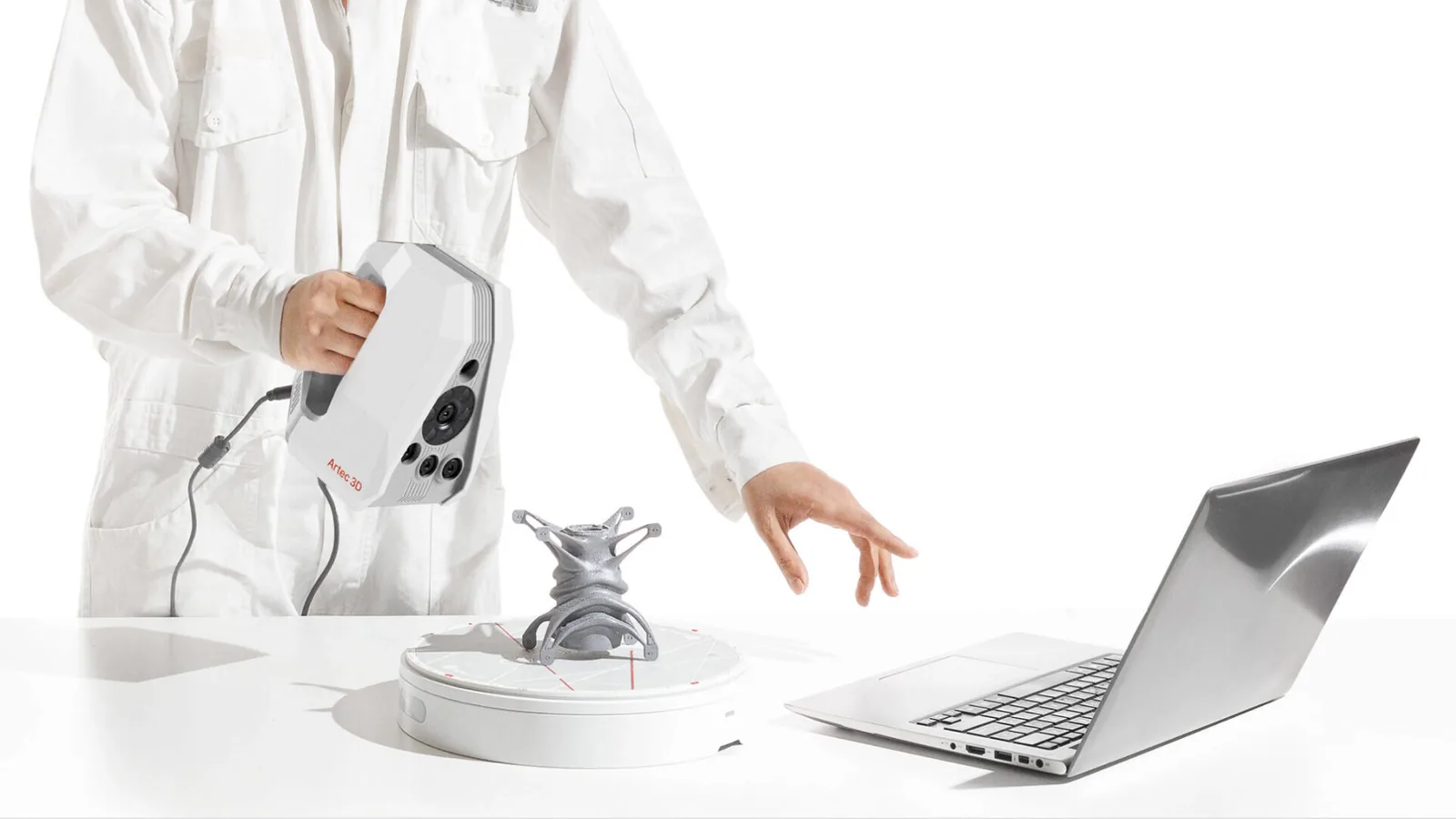
Artec
Spider II
Handheld high-resolution blue-light 3D scanner
Fine-detail color capture of models and small parts without targets.
- Resolution
- 0.05 mm
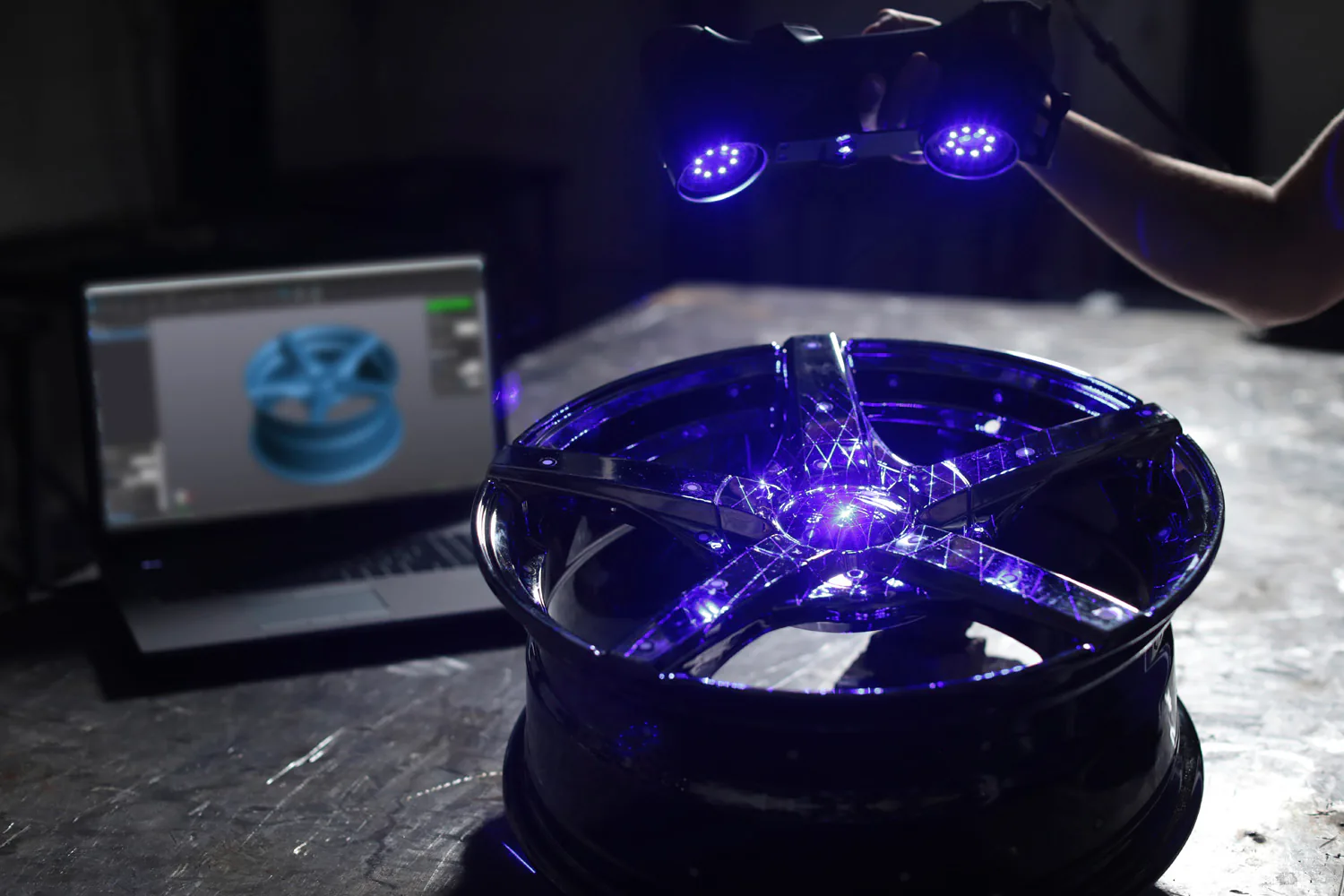
Creaform
HandySCAN BLACK Elite
Handheld metrology-grade blue-laser 3D scanner
Accredited blue-laser accuracy for small, complex metal components and device tooling.
- Accuracy
- 0.025 mm
| Specification | Eva | Micro II | Spider II | HandySCAN BLACK Elite |
|---|---|---|---|---|
| Technology | White structured light | Structured light (RGB LED), automated desktop | Blue-light structured light | Blue laser triangulation |
| Accuracy | Up to 0.1 mm | 5 microns (0.005 mm) | 0.05 mm | 0.025 mm |
| Recommended part size | 0.1–2 m | 200 × 200 × 150 mm, 2 kg | 50–500 mm | 0.05–4 m |
| Positioning targets | Not needed | Not needed | Not needed | Required |
| Color texture | Yes | Yes | Yes | No |
| Wireless operation | No (cable) | No (cable) | No (cable) | No (cable) |
| Weight | 0.9 kg | 12 kg | 0.95 kg | 0.94 kg |
Specs checked:
What does a demo for a medical team show?
Pick the job that is hardest today: a small device component with tight tolerances, an anatomical model with fine detail, or a fitting workflow for patients that you want to speed up. We scan it at your facility and show you the mesh, its detail and color, and a comparison with your CAD where you have one. If you work with patients, say so in your request, so we bring a scanner suited to scanning people. On-site demos are available in most areas; ask when you request.
What else do medical devices and healthcare teams ask?
Which scanner is best for orthotics and prosthetics?
The Artec Eva is a common choice: it projects white light that Artec states is safe for people, needs no targets on the skin, weighs 0.9 kg and captures quickly so the person holds still for less time. The Artec Leo suits full-body scans with no cable. Both record color, which helps with landmarks and fit.
Can a scanner inspect small medical device parts?
Yes. The Artec Micro II measures small parts up to 200 × 200 × 150 mm at 5 microns with 2-micron repeatability, automatically, so results are consistent between operators. For metal parts, Creaform's HandySCAN BLACK Elite brings accredited 0.025 mm accuracy. Scans are compared with CAD in Artec Studio or Creaform's Inspection module.
Do medical parts need to be marked or sprayed for scanning?
Often not. The Artec Micro II, Spider II and Eva track without targets, so parts and patients stay clean. Blue-laser scanners such as the HandySCAN line use targets, which can go on a fixture around a small part instead of on it, and are designed to handle shiny and dark surfaces without spray.
See it scan a patient, a model or a device
Tell us whether you need a limb or a face for a custom fit, a detailed anatomical model, or a small device component checked against CAD. We bring a scanner suited to the job and show you the result. On-site demos are available in most areas; ask when you request.