Industry guides
Plaster casting vs 3D scanning for orthotics and prosthetics: what the evidence says
3D scanning vs plaster casting for orthotics and prosthetics: what a study measured, where casting still helps, and what a scan changes for an O&P practice.
Key takeaways
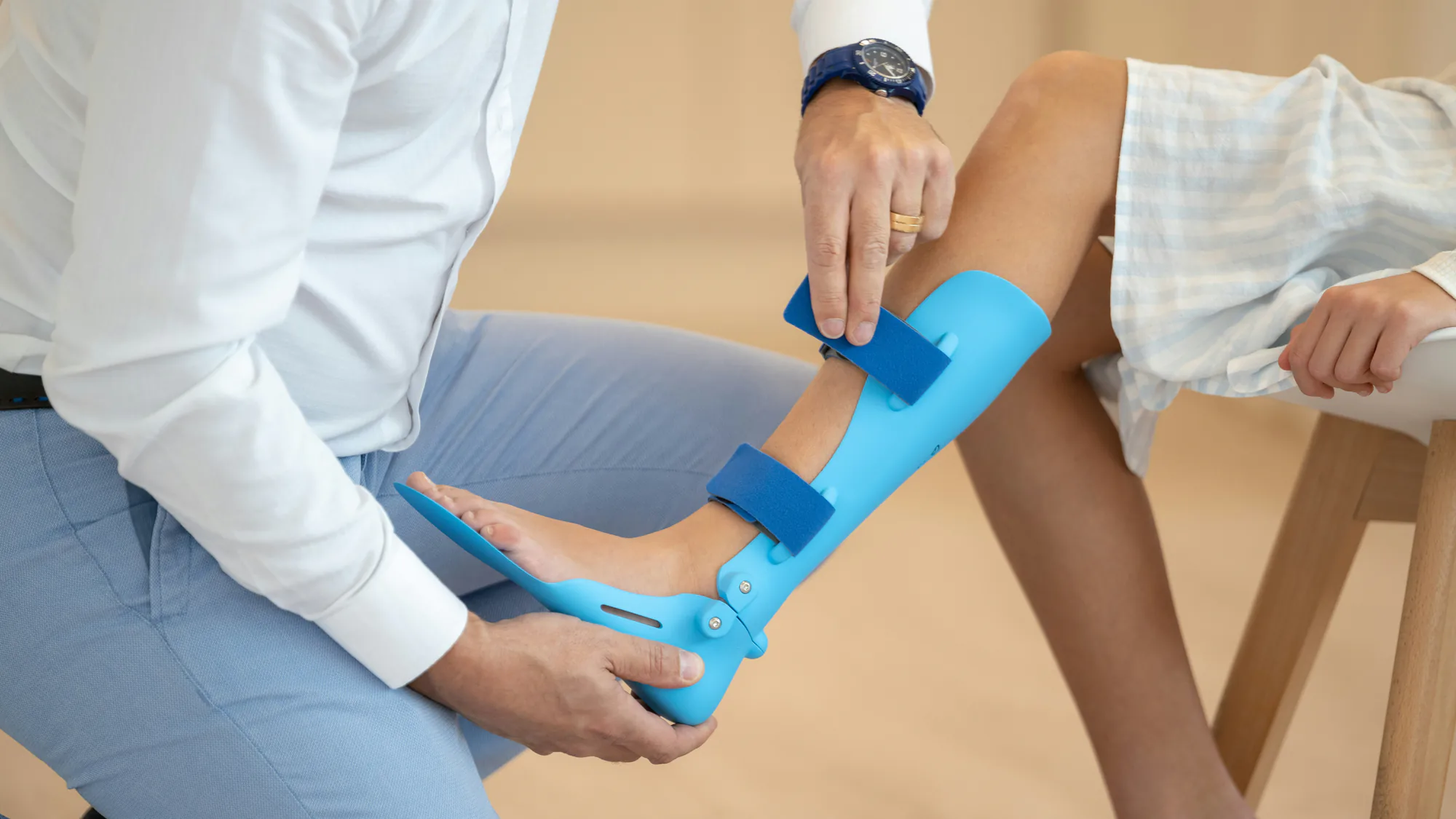
- Plaster casting is still the reference method in most studies, partly because the orthotist can hold the limb in a corrected position while the cast sets.
- A study of children's ankle-foot orthoses in the Journal of Foot and Ankle Research found every scanning method within its accuracy threshold against the cast on average, and faster than casting.
- The same paper cites an earlier trial in which scanning did not improve the quality or speed of orthosis delivery, so the workflow around the scan matters as much as the scanner.
- Scanning changes records and logistics: a digital model can be stored, compared over time and sent to a fabrication lab without posting a cast.
- Artec states that the Eva's white structured light is safe for scanning people; choosing a scanner is covered in our people and medical guide.
Most orthotic and prosthetic practices still take plaster casts, and many are deciding whether to go digital. The question they ask is a fair one: is a scan as good as a cast, and what do you give up? Our medical devices industry page covers scanning for implants, devices and fitting more broadly; this article stays with one comparison and the evidence behind it.
We sell scanners, so we have tried to keep this even-handed: what the research measured, where casting still earns its place, and what a scan changes in daily practice. Which scanner to buy is a separate question, answered in our best 3D scanners for people and medical work.
In this article
Is 3D scanning as accurate as plaster casting?
For the shapes many orthoses need, research suggests a scan can agree closely with a cast, with caveats. A study in the Journal of Foot and Ankle Research compared plaster casts of children's feet, ankles and lower legs with scans from a high-cost scanner, the Artec Eva, and a low-cost sensor. On average, every scanning protocol stayed within the authors' preset acceptability threshold against the cast, though individual landmarks such as rearfoot width and arch height differed more. The cast was the reference, so the study shows agreement with casting, not that either method is more correct.
That paper also cites an earlier randomized controlled trial in which laser scanning did not improve the quality or speed of ankle-foot orthosis delivery compared with plaster casting. Read together, the two results make a useful point: a scan can capture the limb well and still not speed up a practice whose modification, fabrication and fitting steps stay the same.
Where does plaster casting still help?
Casting shines when the shape you need is not the shape the limb holds on its own. While the plaster sets, the orthotist can hold the foot and ankle in a corrected position, apply pressure over soft tissue and feel the anatomy, and that held position is captured in the cast. A scan records the limb as it is presented, so a corrective hold needs a second person, whose hands then appear in the scan and must be removed digitally. The study's authors note that correcting position in software is possible but has not been studied or shown to be effective.
Plaster casting and 3D scanning side by side
| Factor | Plaster casting | 3D scanning |
|---|---|---|
| Capture | Wet plaster wrap, left to set, then removed | Handheld scan with no contact with the skin |
| Corrective holds | Held by the orthotist while the cast sets | Needs a second person, or correction in software |
| Capture speed | Slower in the study's comparison | Faster for every scanning method in the study |
| Fine surface detail | Recorded directly in the plaster | Depends on scanner resolution and on the patient keeping still |
| Mess and materials | Plaster, water, cleanup and a cast to store | No consumables at capture |
| Records | A physical cast to store or post | A digital model to store, compare and send |
| Fabrication | Positive mold filled and modified by hand | Model modified in software for carving or 3D printing |
How does a scan fit into fabrication?
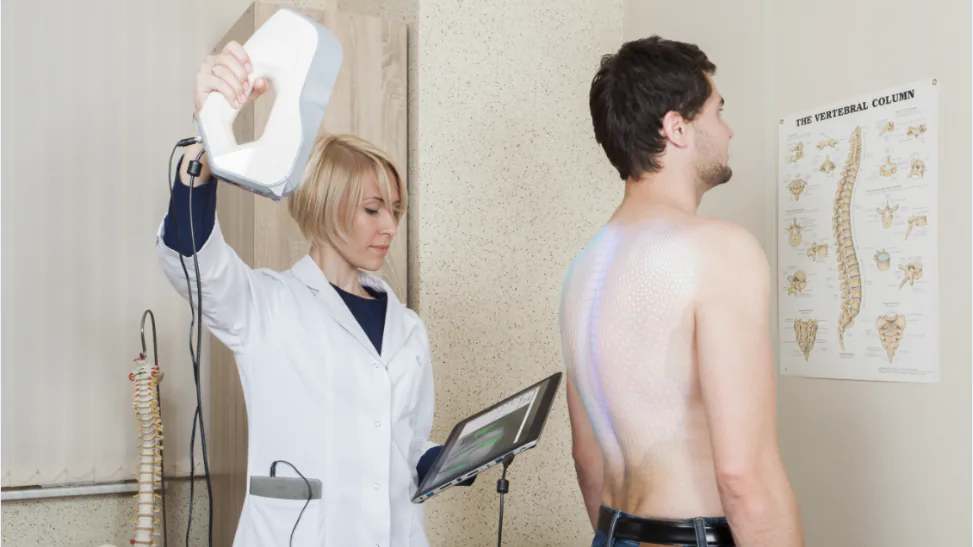
The scan replaces the negative cast, not the craft that follows it. The model goes into O&P design software, where the clinician or technician rectifies it: builds up relief areas, reduces load areas, sets trim lines and corrects alignment. The rectified model is then carved as a positive for traditional thermoforming or used to 3D print a device directly. Because the original scan is kept, a practice can compare a patient's shape over time, remake a device without recasting, or send the file to a central fabrication lab instead of posting a cast.
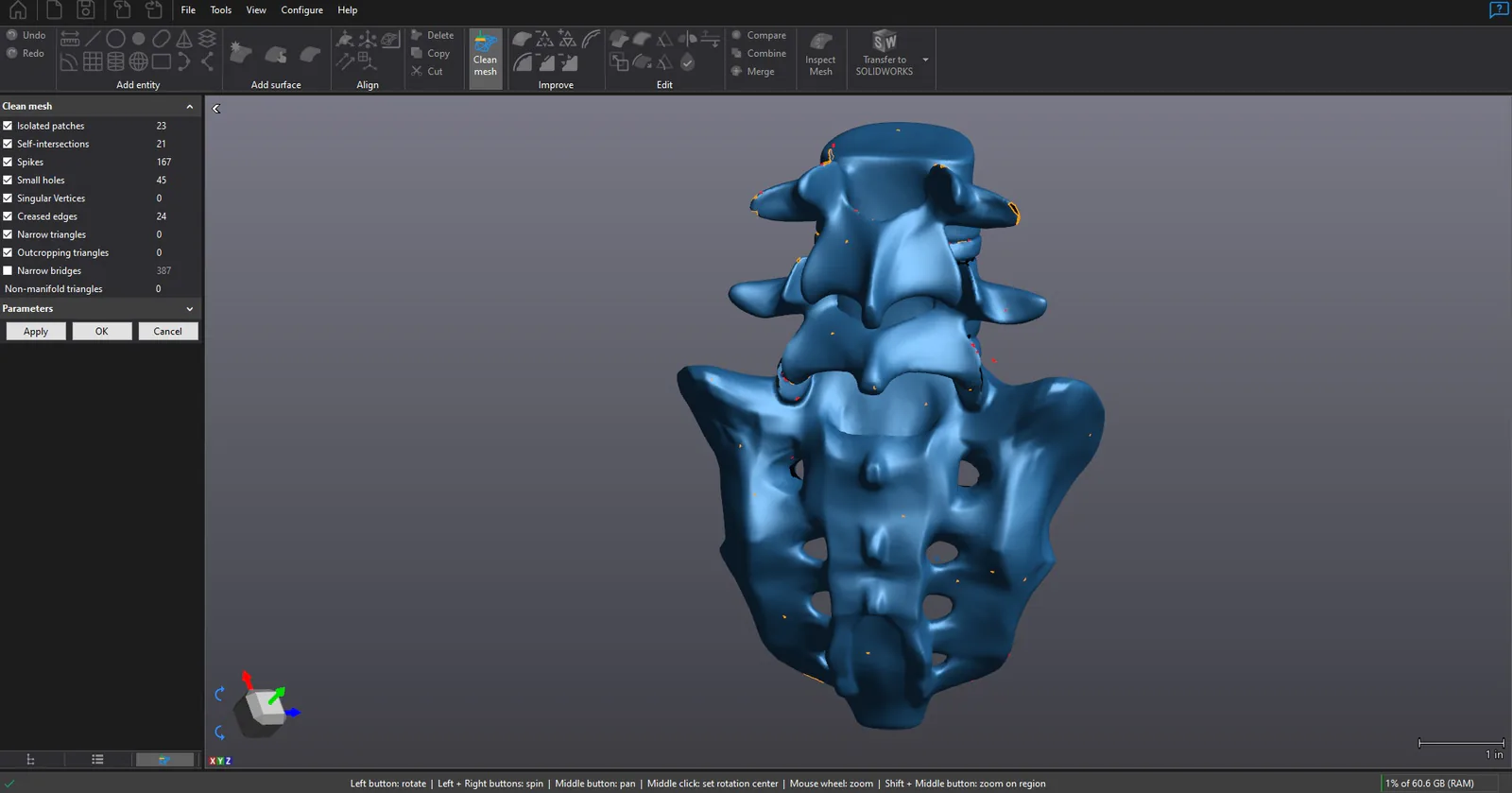
Cleanup is a small step worth doing well. A good scan of a limb has no holes over the areas that bear load and no stray fragments from a helper's hands or the room. Artec Studio handles that cleanup and exports STL, OBJ or PLY for O&P design software.
Which scanners do O&P practices use?
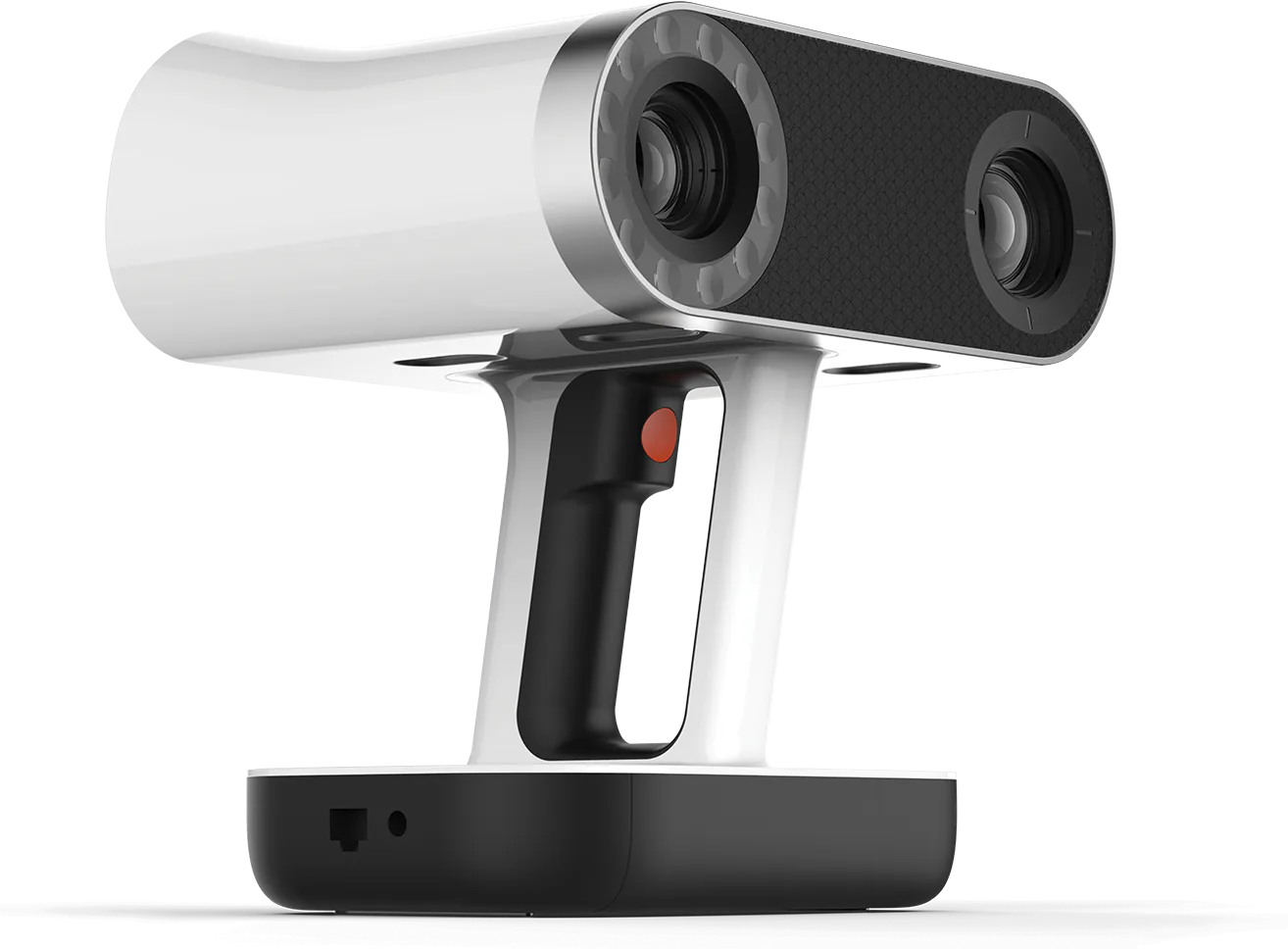
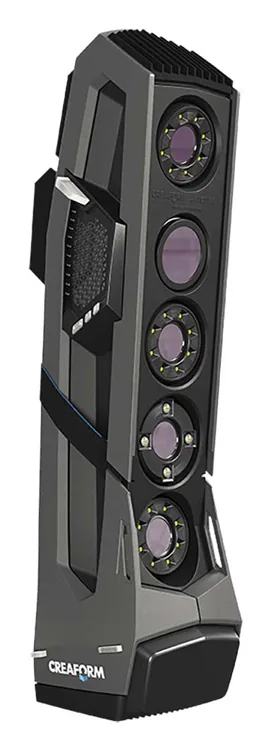
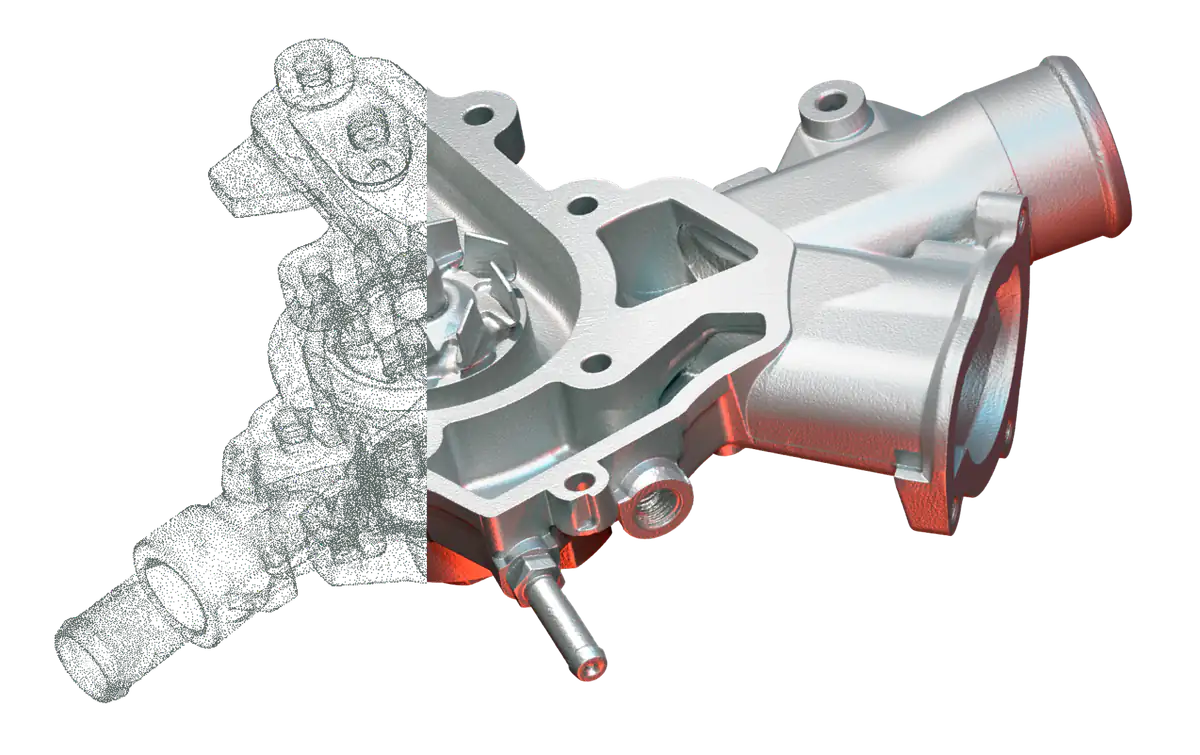
Structured-light handheld scanners are the usual choice, because they are quick, need no targets on the skin and capture color. The Artec Eva weighs 0.9 kg and works 0.4 to 1 m from the subject, and Artec states that its white light is safe for scanning people. The wireless Artec Leo suits whole-body and full-limb work because no cable trails around the patient. Creaform's Go!SCAN SPARK uses white light and records shape and color together. The right pick depends on what you scan most: feet and lower legs, residual limbs, backs or heads.
Our Go!SCAN SPARK vs Artec Eva comparison and our Artec Leo vs Artec Eva comparison set the options side by side, and the Artec Eva and Artec Leo pages carry their full specifications. For why structured light, rather than a laser, is the norm for scanning people, see our guide to laser vs structured light scanners.
Taking a practice digital, one step at a time
- Start with one device type, such as foot orthoses or AFOs, and run casting and scanning side by side on the same patients for a while.
- Agree how corrective holds will be done before the first scan, and who does them.
- Check that your fabrication lab or design software accepts the scanner's export formats.
- Keep casting for cases where a held position or palpation matters most, and track remakes for both methods.
A side-by-side period answers the question the studies cannot answer for you: whether scanning works for your patients, your clinicians and your lab.
Trying scanning in your own practice
When we bring scanners to your practice, our specialists show capture, cleanup and export on the kind of subject you work with, so you can judge the workflow rather than a brochure. Tell us in your request that you scan patients, and what you scan most, so we bring the right scanners. Our guide to what a 3D scanner can scan covers people as well as objects.
Frequently asked questions
Is 3D scanning safe for patients?
Artec states that the Eva's white structured light, from a flash source rather than a laser, is safe for scanning people and animals. Scanning involves no contact with the skin and no wet plaster. As with any device used in clinical care, follow the maker's instructions and your own clinical policies.
Does a scan keep the fine detail of a cast?
It depends on the scanner and on the patient keeping still. Casting records skin texture and small contours directly in plaster. A structured-light scanner such as the Artec Eva reaches up to 0.2 mm resolution in HD mode, which suits most orthoses, but movement during the scan blurs detail. Short scans and a stable position matter more than the specification.
Is scanning faster than casting?
For the capture step, the study of children's ankle-foot orthoses found every scanning method significantly faster than plaster casting. The whole process is another matter: the same paper cites a trial in which scanning did not speed up orthosis delivery, because modification, fabrication and fitting still take their own time.
Can one scanner handle feet, legs and backs?
Usually, yes. A handheld structured-light scanner such as the Artec Eva covers feet, lower legs, residual limbs and backs, and the wireless Artec Leo adds whole-body reach without a cable. Small, detailed areas such as fingers or facial features may call for a higher-resolution scanner, which our people and medical guide compares.
Do we still need casting skills after going digital?
Yes. The scan replaces the negative cast, but rectifying a model still takes the same judgment about relief, load and alignment, now applied in software. Many practices also keep casting for patients who need a corrected position held during capture or who cannot stay still for a scan.
Products in this article
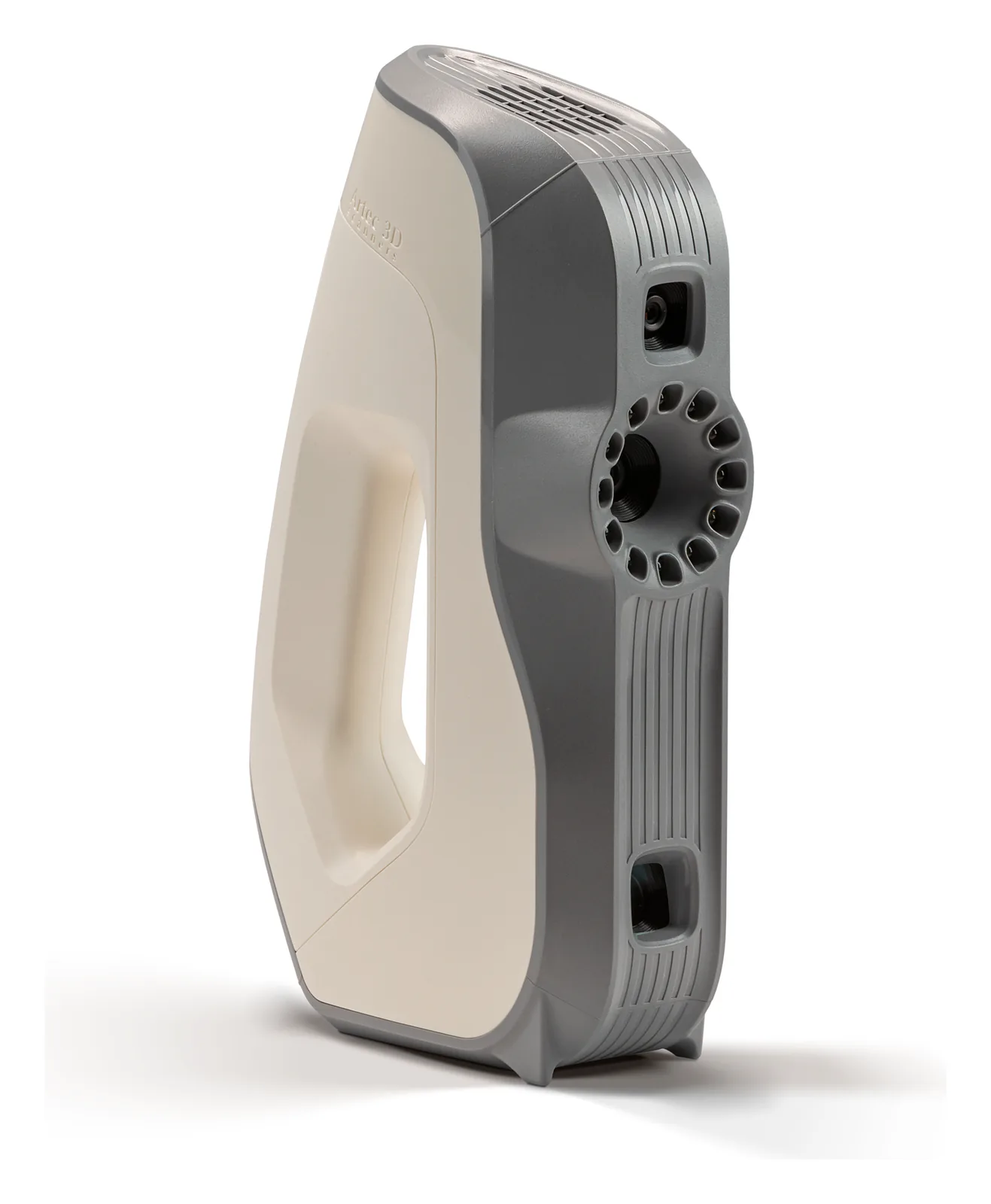 Artec
Eva
Handheld structured-light 3D scanner
0.1 mmBest accuracy
A 0.9 kg target-free color scanner for medium objects, people and parts from about 10 cm up.
- Part size
- 0.1–2 m
- Targets
- Not needed
 Artec
Leo
Wireless handheld 3D scanner with onboard processing
0.1 mmBest accuracy
A fully wireless scanner with its own screen, processor and battery for medium to large objects.
- Part size
- 0.2–2 m
- Targets
- Not needed
 Creaform
Go!SCAN SPARK
Handheld white-light 3D scanner with color capture
0.050 mmBest accuracy
White-light handheld scanner that records shape and color together, with no tripod, arm or mandatory targets.
- Part size
- 0.1–4 m
- Targets
- Optional
 Artec
Artec Studio
3D scan capture and processing software
The capture and processing software for current Artec scanners, with scan-to-CAD and inspection tools built in.
- Runs on
- Windows 10 x64, Windows 11
- Artec Neo support
- Native in Artec Studio