Buyer's guide
Best 3D scanner for scanning people and medical work
Choose a scanner that captures a limb, a face or a torso comfortably and in color: our four picks, ranked, including the one for small medical parts.
Key takeaways
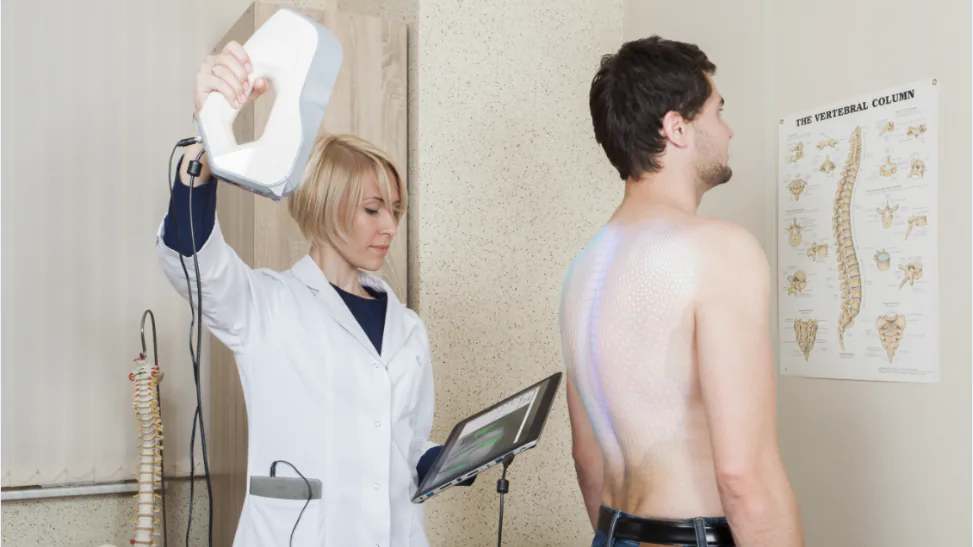
- The Artec Eva uses white light, not a laser, which Artec states is safe for people, and needs no targets.
- The Artec Leo scans a whole body or a person in a room without cables, with color texture.
- The Artec Micro II measures small medical components and dental items at 5 microns.
- The Creaform Go!SCAN SPARK records shape and 24-bit color together with white light.
Which scanners do we pick for scanning people, and in what order?
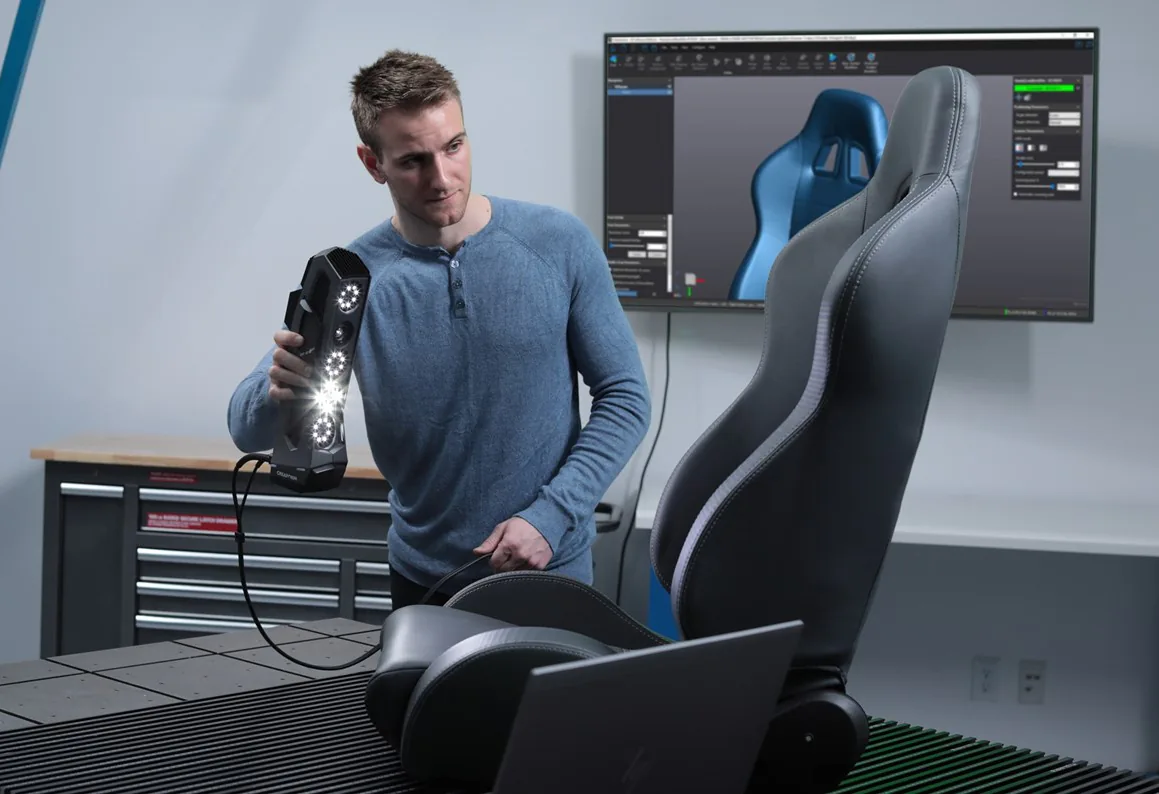
We rank four. First, the Artec Eva: white structured light that Artec states is safe for people, no targets on the skin, and a light body that moves easily around a patient. Second, the Artec Leo, which does the same work with no cable, laptop or outlet, useful in a small clinic room or on location. Both are rated at up to 0.1 mm, which suits orthotics, prosthetics and custom devices. Third, the Artec Micro II, a desktop scanner for small precision components and dental items, where its automated stage matters more than speed. Fourth, Creaform's Go!SCAN SPARK, which brings white-light color capture from the Creaform range. Choose the Eva for most fitting work, the Leo when cables get in the way, and the Micro II only for small components.
For the clinic, lab and device-maker workflows these picks support, see 3D scanning for medical devices and healthcare.
Which jobs does a scanner for scanning people and medical work do most often?
These are the six jobs we see most often in scanning people and medical work: orthotics, prosthetic sockets, custom-fit devices for the head, spinal and torso scans, dental items and anatomical and surgical models. Each card says what is scanned and what the scan is used for, so you can match your own work to the scanners recommended on this page. If your job is not listed, describe it when you request a demo, with what you would want scanned.
Orthotics
Scan a foot, leg or torso in one short pass and design the orthotic in CAD from the mesh.
Prosthetic sockets
Capture a residual limb without contact as the starting shape for a socket design.
Custom-fit devices for the head
Capture a face or head in shape and color for masks, helmets and other custom-fit devices.
Spinal and torso scans
Record a back or torso while the person stands still, as the shape for braces and supports.
Dental items
Digitize dental models and small items in fine detail and color on a desktop scanner.
Anatomical and surgical models
Scan printed or cast models in color for planning, teaching and patient conversations.
Which scanners are best for scanning people and medical work?
For scanning people and medical work, these four scanners are the strongest fits across the Creaform and Artec ranges, listed in the order we recommend them: Eva, Leo, Micro II and Go!SCAN SPARK. Each card says why it earns its place and shows one headline fact taken from the maker's published specifications. We rank them for the jobs described on this page; the size of what you scan, the accuracy you need and your surfaces can move a lower pick to the top. Compare them side by side in the table, then see the one you favor scan your own work before you decide.
Artec
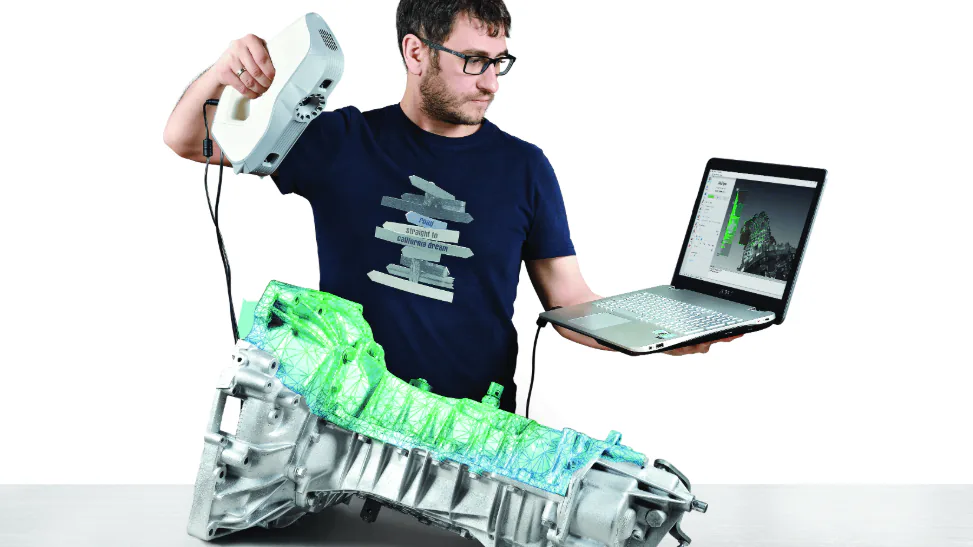
Eva
Handheld structured-light 3D scanner
The established choice for orthotics, prosthetics and medical fitting: white light, no targets, a light 0.9 kg body and fast capture that keeps the scan short.
- Accuracy
- Up to 0.1 mm
Artec
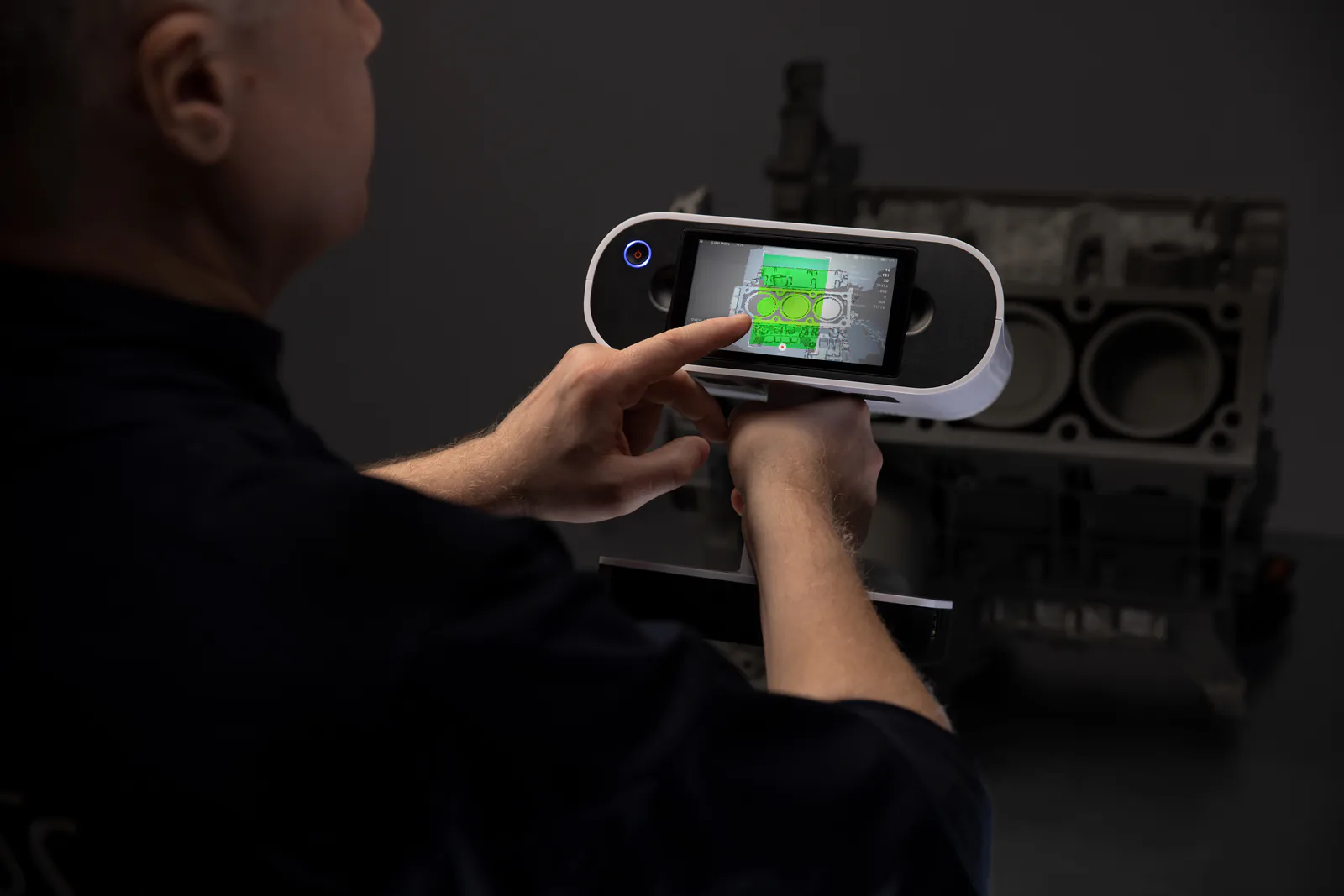
Leo
Wireless handheld 3D scanner with onboard processing
For full-body and larger scans, walk around the person with no cable, watching coverage on the scanner's own screen.
- Wireless operation
- Yes
Artec
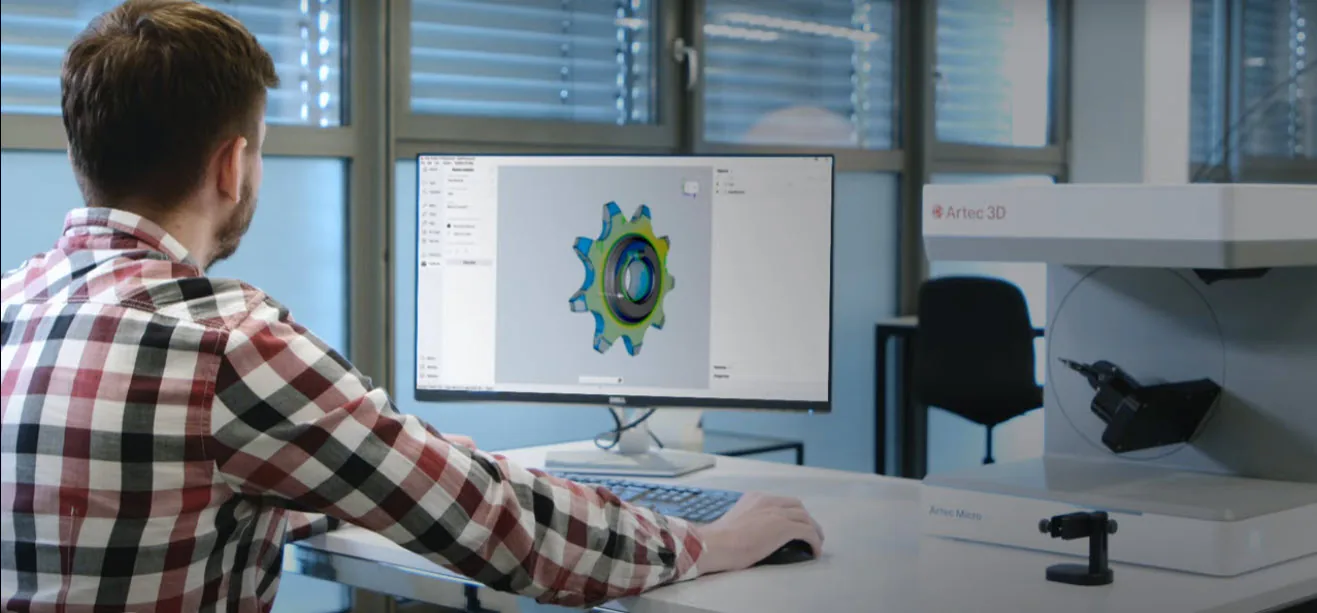
Micro II
Automated desktop 3D scanner
For device makers: dental items and small medical components measured automatically, in color, with 2-micron repeatability.
- Accuracy
- 5 microns (0.005 mm)
Creaform
Go!SCAN SPARK
Handheld white-light 3D scanner with color capture
A white-light Creaform option that captures shape and color in one pass, for teams that also measure parts in Creaform's software.
- Color texture
- Yes
| Specification | Eva | Leo | Micro II | Go!SCAN SPARK |
|---|---|---|---|---|
| Technology | White structured light | Structured light (VCSEL) | Structured light (RGB LED), automated desktop | White structured light |
| Accuracy | Up to 0.1 mm | Up to 0.1 mm | 5 microns (0.005 mm) | Up to 0.050 mm |
| Resolution | Up to 0.2 mm (HD mode) | Up to 0.2 mm (HD mode) | 40 microns | 0.100 mm |
| Recommended part size | 0.1–2 m | 0.2–2 m | 200 × 200 × 150 mm, 2 kg | 0.1–4 m |
| Positioning targets | Not needed | Not needed | Not needed | Optional |
| Color texture | Yes | Yes | Yes | Yes |
| Wireless operation | No (cable) | Yes | No (cable) | No (cable) |
| Weight | 0.9 kg | 2.6 kg | 12 kg | 1.25 kg |
Specs checked:
Is 3D scanning safe for people?
The Artec Eva projects white light from a flash source rather than a laser, and Artec states it is safe for people and animals. The Artec Leo uses a VCSEL light source rated laser class 1. The Creaform Go!SCAN SPARK uses white light. Metrology laser scanners such as the HandySCAN line are designed for parts, and they rely on targets, which you would not want on skin. For any clinical setting, follow your own device and safety procedures.
What helps get a clean scan of a person?
Speed, no targets and steady posture. A person cannot hold perfectly still, so a scanner that captures quickly keeps movement noise low: the Eva reconstructs up to 16 frames per second, and the Leo covers large areas in few passes. Tracking on geometry and color removes the need for targets on skin. Position the person comfortably, support the limb if needed, and scan in one smooth pass. HD mode in Artec Studio can then recover finer features from the data.
What else do buyers ask about scanners for scanning people and medical work?
Which 3D scanner is best for orthotics and prosthetics?
The Artec Eva is a common choice: white light that Artec states is safe for people, no targets, 0.9 kg, and fast capture that keeps the scan short. For full-body work or a lot of movement around the subject, the Leo removes the cable and adds onboard processing. Both record color texture, which helps with landmarks and fit.
How accurate does a scanner need to be for medical fitting?
For orthotics, prosthetics and custom fit, the Eva and Leo's stated accuracy of up to 0.1 mm is typically well within what a fitting needs, since skin and soft tissue move far more than that. For small medical components and dental items, where parts are made to tight tolerances, the Artec Micro II's 5-micron accuracy is the relevant class.
Do I need targets to scan a person?
No. The Artec Eva, Leo and Spider II track on the shape and color of the subject, so nothing is stuck to the skin. The Go!SCAN SPARK can also track on geometry and color. Target-based laser scanners, such as the HandySCAN line and the Artec Point II, are meant for parts rather than people.
Can a scanner capture skin color and texture?
Yes. The Artec Eva records 1.3 MP color texture and the Leo 2.3 MP, in the same pass as the geometry, and the Creaform Go!SCAN SPARK records 24-bit color. Color shows landmarks, marks drawn by the clinician and skin tone, which helps both the fitting and the patient conversation.
See these scanners on your own work
Choose the job that matters most, whether that is a part, a person or a whole building. We scan it where it is with the scanner you choose and show you the result. On-site demos are available in most areas; ask when you request.