Industry
3D scanning for forensics and public safety
Capture a scene, a vehicle or a small object accurately and in color, without touching it, and keep measuring it long after the scene is released.
Key takeaways
- Tripod LiDAR such as the Artec Ray II records whole scenes from 0.5 to 130 m in color, with no targets placed in the scene.
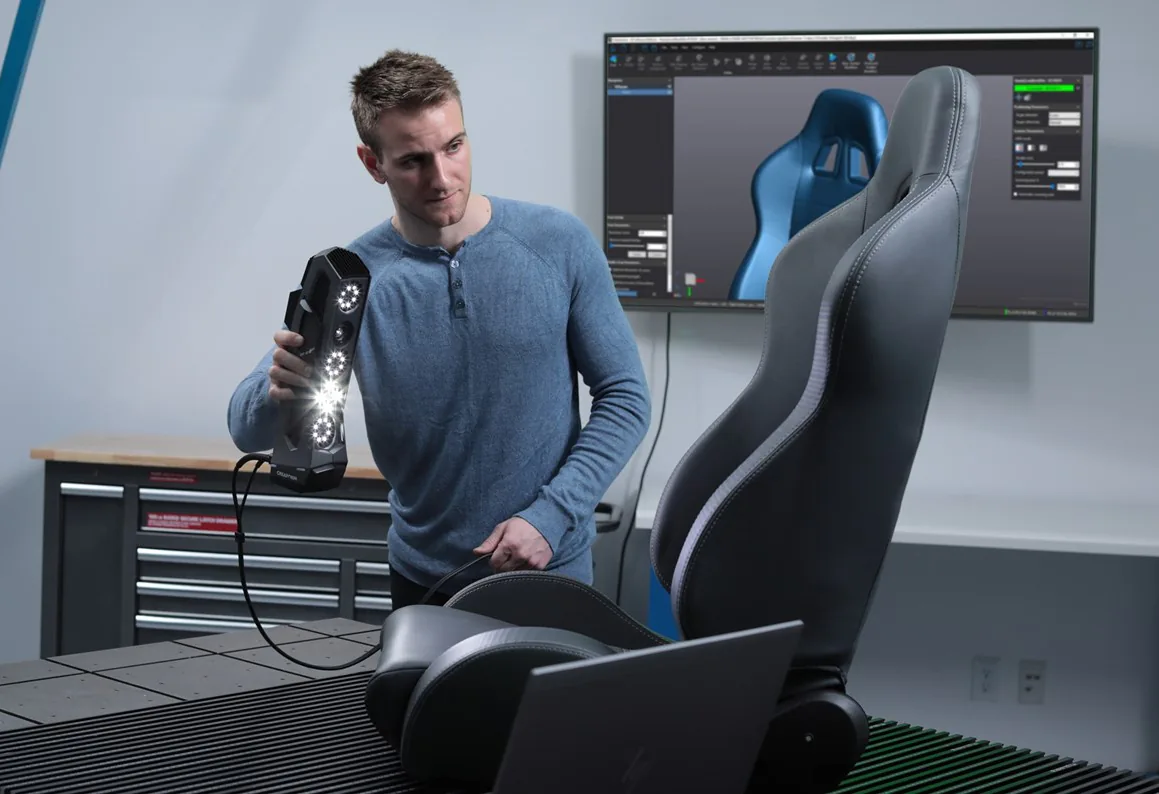
- The Artec Leo scans rooms, vehicles and objects with no cable, using its own screen, processor and battery.
- The Artec Spider II and Micro II capture small objects in fine detail and color without contact.
- A scan stays measurable after the scene itself is released.
Where does measurement slow forensic and public-safety work down?
Forensic and public-safety scanning covers three jobs: documenting crime and collision scenes, measuring vehicles, and recording evidence objects. Each races the clock, because the scene changes. Tape measures, sketches and photographs record what someone chose to record, and once a scene is released, nothing more can be measured: vehicles are towed, rooms are cleaned and small items go to the lab. A 3D scan records the whole scene, vehicle or object as measurable geometry in color, without touching it, so investigators and reconstruction specialists can take new measurements later, compare views and explain a layout clearly. We describe what scanners capture; how the data is used is a matter for your agency and its procedures.
For the long-range and handheld scanners we rank first for scene-scale capture, see Best 3D scanner for large sites and buildings.
Typical applications
Indoor scenes
Record rooms and their contents in color as a measurable 3D model.
Collision scenes and vehicles
Capture vehicle damage, vehicle positions and the surrounding road or lot.
Evidence objects
Scan small items in fine detail without touching or marking them.
Planning and training
Use scans of buildings and venues for response planning and exercises.
What do we capture for forensic and public-safety teams?
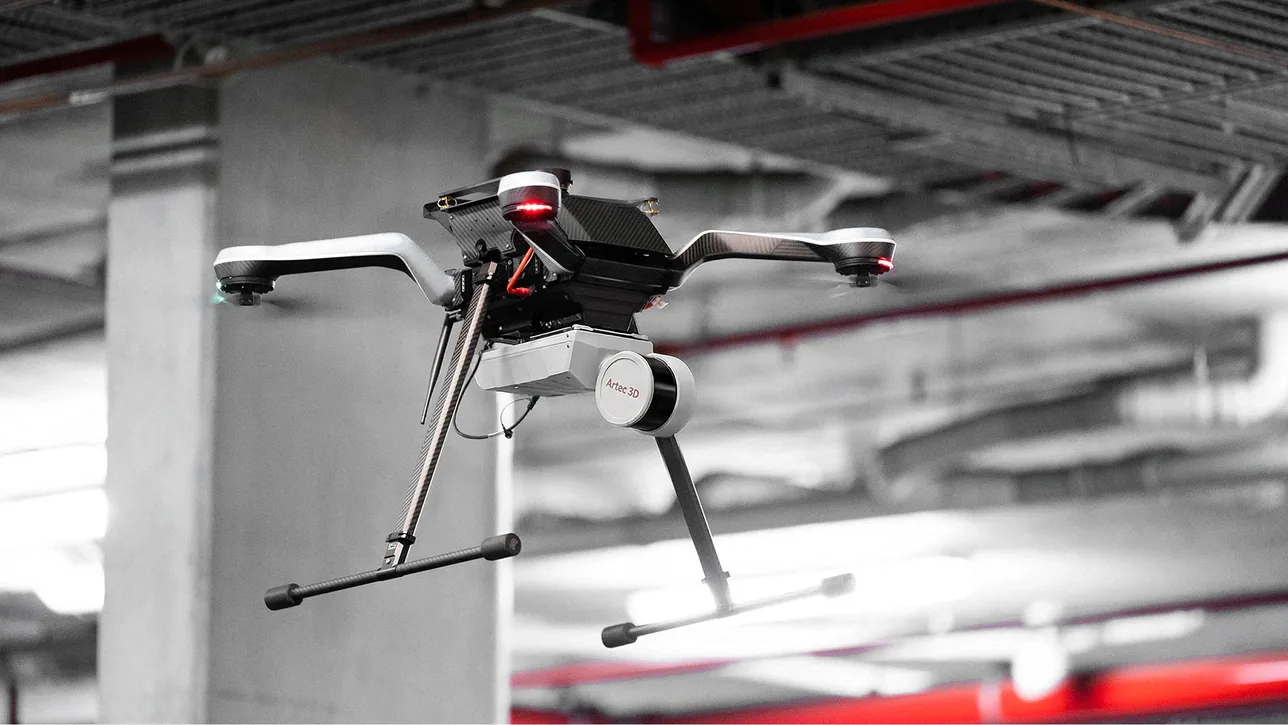
Scenes, vehicles and objects, each at its own scale. Indoor scenes are captured from tripod positions or with a wireless handheld; outdoor and collision scenes need long range; vehicles need coverage and close detail on damage; small objects need fine detail without contact. The table pairs each subject with what is usually recorded and the scanner class that suits it. Every subject is captured as measurable geometry in color, so a question that comes up later can still be answered from the scan.
| What we scan | What is checked or rebuilt | Scanner class that suits it |
|---|---|---|
| Rooms and indoor scenes | Layout, object positions and surfaces, in color | Tripod LiDAR plus a wireless handheldRay II, Leo |
| Outdoor and collision scenes | Road or lot layout, vehicle positions and marks | Tripod LiDAR or mobile mappingRay II, Jet |
| Vehicles | The shape and depth of damage, and the overall form | Wireless handheld, or a large-part laser handheldLeo, HandySCAN MAX EVO |
| Mid-size objects | Shape and color of items such as tools, parts and furniture | Color structured-light handheldEva, Go!SCAN SPARK |
| Small objects | Fine detail and color, without contact or markers | High-resolution handheld or desktop scannerSpider II, Micro II |
| Buildings and venues | Point clouds for planning and training | Mobile mapping or tripod LiDARJet, Ray II |
What we scan for forensics and public safety
Rooms and indoor scenes
- What is checked or rebuilt
- Layout, object positions and surfaces, in color
Outdoor and collision scenes
- What is checked or rebuilt
- Road or lot layout, vehicle positions and marks
Vehicles
- What is checked or rebuilt
- The shape and depth of damage, and the overall form
- Scanner class that suits it
- Wireless handheld, or a large-part laser handheldLeo, HandySCAN MAX EVO
Mid-size objects
- What is checked or rebuilt
- Shape and color of items such as tools, parts and furniture
- Scanner class that suits it
- Color structured-light handheldEva, Go!SCAN SPARK
Small objects
- What is checked or rebuilt
- Fine detail and color, without contact or markers
Buildings and venues
- What is checked or rebuilt
- Point clouds for planning and training
Which surfaces in a scene are hard to scan?
Most scene surfaces are dull and scan well: walls, floors, fabric, wood, skin and painted vehicle panels. The hard ones are glass, mirrors and chrome, which reflect light or let it through, black and very glossy surfaces, and anything wet. On evidence, spray is normally not an option, so the usual approach is a scanner suited to the surface, adjusted settings and extra passes, with photographs to fill what a scan cannot record. Passers-by are handled by scanning twice: the Ray II's double scan removes moving objects.
Walls, floors and furniture
Dull and textured, they scan well from tripod positions and with handhelds alike.
Painted vehicle panels
Usually scan well; dark metallic paint and chrome trim may need extra passes or adjusted settings.
Glass, mirrors and chrome
They reflect light or let it through, so they show as gaps or noise. Photographs fill the record where a scan cannot.
Wet and dark surfaces
Water and very dark finishes return little light. Scan from closer and from several angles.
Which forensic and public-safety jobs do scanners support?
Four come up most: documenting an indoor scene before it is released, recording a collision and the vehicles involved, digitizing small objects for the lab, and capturing buildings and venues for planning and training. In each case the value is the same, a complete and measurable record that can be revisited after the scene itself is gone. Artec documents one collision-reconstruction firm's use of the Leo below.
Scene documentation
Capture a room or a site from several positions and merge them into one colored, measurable model.
Crashed vehicles, inside and out
Artec documents how Origin Forensics scans crashed vehicles with the Artec Leo and compares them with undamaged ones to determine the extent of crush.
Object capture for the lab
Scan small items in color without contact, then measure and view them from any angle.
Planning and training
Map buildings and venues so teams can plan responses and train on an accurate model.
Where does Creaform fit in forensic and public-safety work?
Creaform does not list forensics among its industries, so we recommend its scanners here only for the measuring jobs they are built for. The Go!SCAN SPARK captures objects from 0.1 to 4 m in shape and 24-bit color, tracking on geometry or color texture, which suits items such as damaged parts and equipment. The HandySCAN MAX EVO measures large parts, from 1 to 15 m on its Elite model, with no surface preparation, so it can record a vehicle body or a structure in metrology detail. For scenes and rooms, Artec's LiDAR and wireless scanners are the better fit.
Creaform products named here:
Where does Artec fit in forensic and public-safety work?
Artec covers every scale and lists forensics among the industries of several scanners. The Ray II captures a scene from tripod positions over 0.5 to 130 m with 36 MP HDR color, and a double scan removes people moving through it. The wireless Leo scans rooms, vehicles and objects with no laptop, and Artec names crime scenes among its typical subjects. The Spider II and Eva capture objects in color without contact, and the Micro II records very small items at 5 microns. For large outdoor areas, the Jet maps on the move, and Artec lists public safety among its industries.
Artec products named here:
Which scanners are best for forensics and public safety?
For forensics and public safety, these four scanners are the strongest fits across the Creaform and Artec ranges: Ray II, Leo, Spider II and Go!SCAN SPARK. Each card says why it fits and shows one headline fact taken from the maker's published specifications. They are not ranked against each other, because the right choice depends on the size of what you scan, the accuracy you need and your surfaces. Compare them side by side in the table, then see the one you favor scan your own work before you decide.
Artec
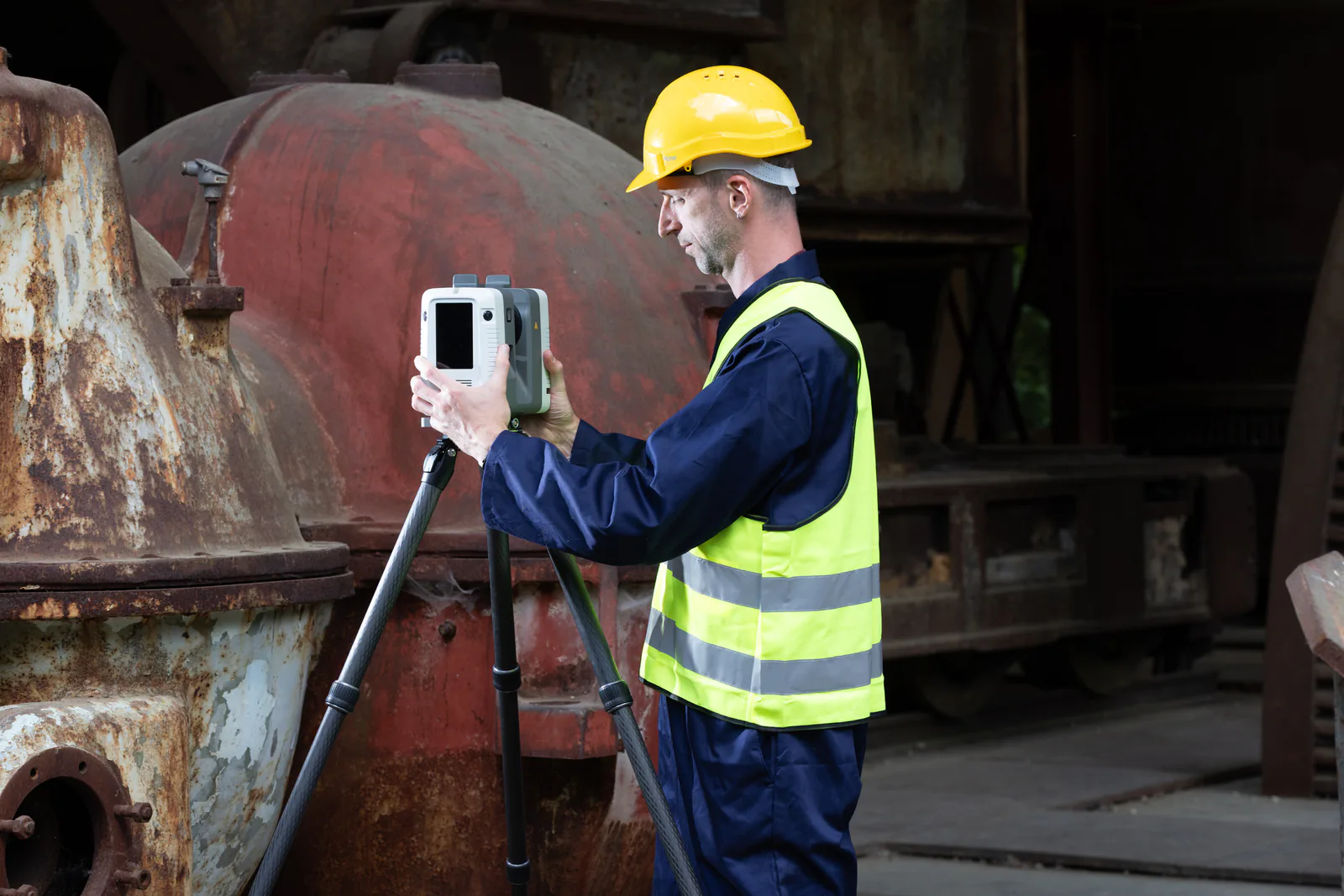
Ray II
Tripod-mounted long-range LiDAR scanner
Records a whole room, building or outdoor scene from tripod positions in color, with no targets placed in the scene.
- Working distance
- 0.5–130 m
Artec
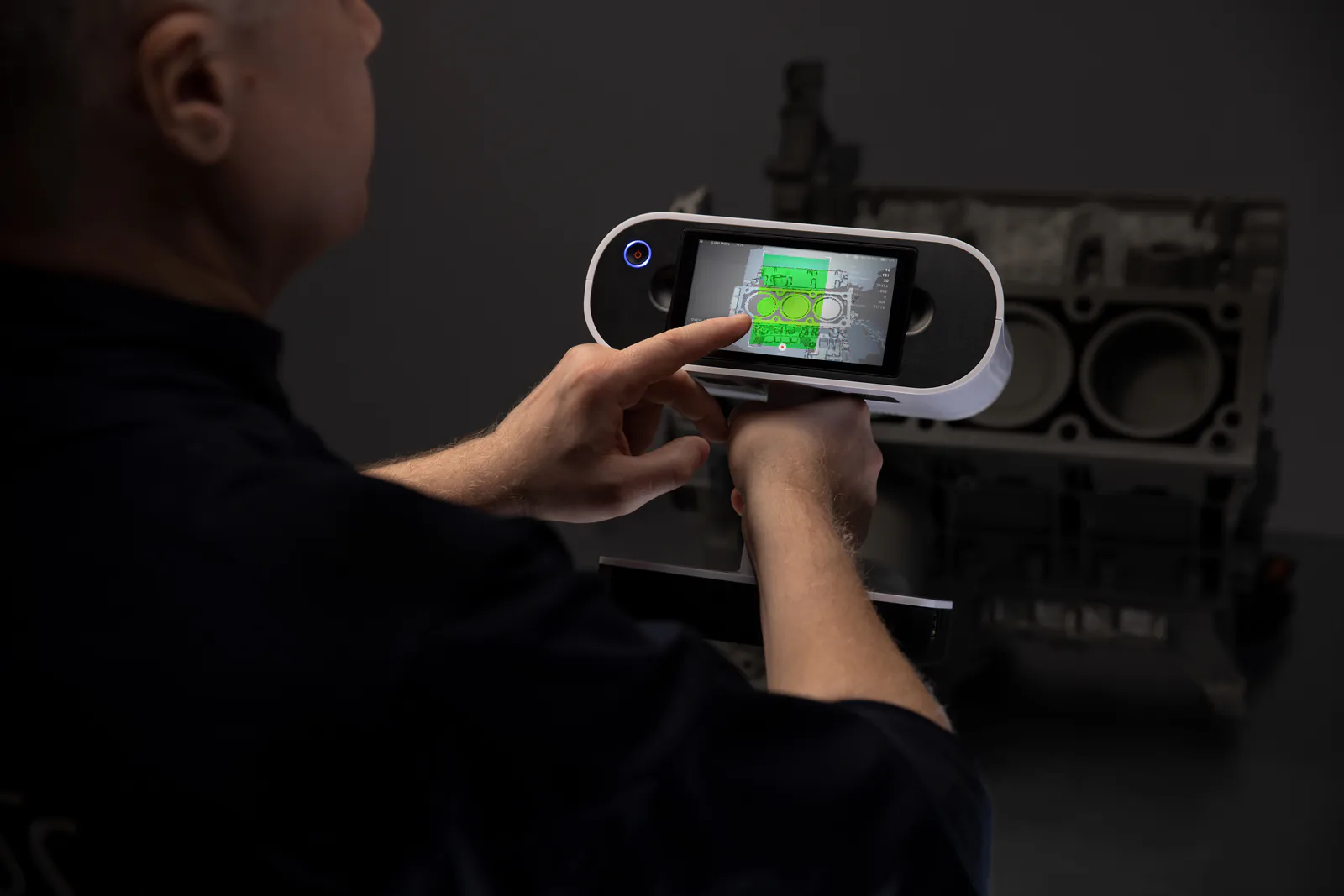
Leo
Wireless handheld 3D scanner with onboard processing
Walk through a room or around a vehicle and capture it in color with no cable or laptop.
- Wireless operation
- Yes
Artec
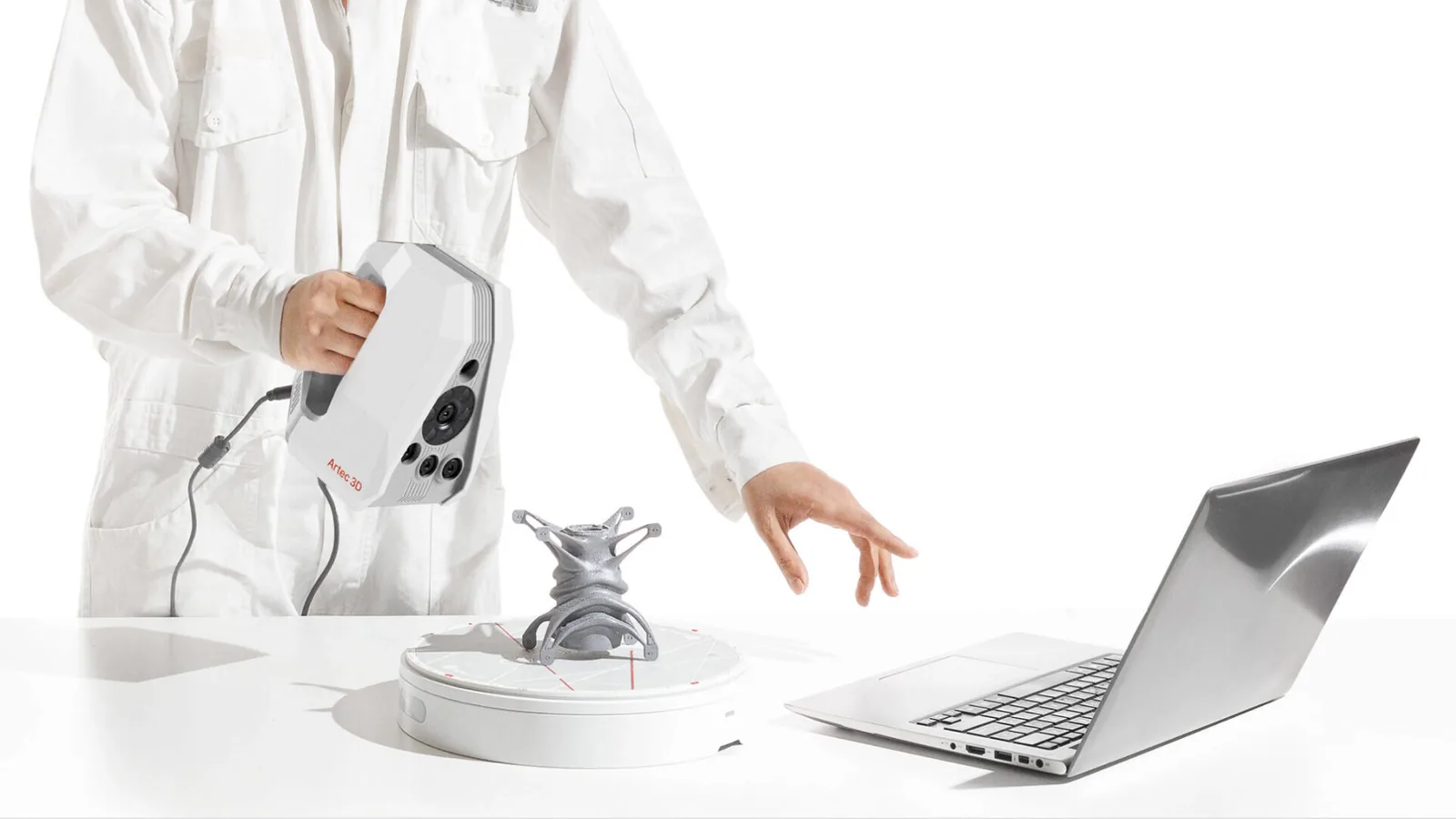
Spider II
Handheld high-resolution blue-light 3D scanner
Small objects captured in fine detail and color, without contact or markers.
- Resolution
- 0.05 mm
Creaform
Go!SCAN SPARK
Handheld white-light 3D scanner with color capture
Creaform's color scanner for objects and parts, tracking on shape or color texture, usually without targets.
- Color texture
- Yes
| Specification | Ray II | Leo | Spider II | Go!SCAN SPARK |
|---|---|---|---|---|
| Technology | LiDAR, time of flight with Waveform Digitizing | Structured light (VCSEL) | Blue-light structured light | White structured light |
| Accuracy | 1.9 mm @ 10 m; 2.9 mm @ 20 m; 5.3 mm @ 40 m | Up to 0.1 mm | 0.05 mm | Up to 0.050 mm |
| Recommended part size | Range 0.5–130 m (LiDAR) | 0.2–2 m | 50–500 mm | 0.1–4 m |
| Positioning targets | Not needed | Not needed | Not needed | Optional |
| Color texture | Yes | Yes | Yes | Yes |
| Wireless operation | Yes | Yes | No (cable) | No (cable) |
| Weight | 5.35 kg (nominal, without batteries) | 2.6 kg | 0.95 kg | 1.25 kg |
Specs checked:
What does a demo for a forensic or public-safety team show?
Choose a space or bring objects that represent your work: a room, a vehicle, or small items of the kind your lab handles. We scan them with the scanners you want to compare and show you the colored model, how measurements are taken from it, and how scans from a tripod scanner and a handheld are merged into one dataset. Say in your request whether you work indoors, outdoors or both. On-site demos are available in most areas; ask when you request.
What else do forensics and public safety teams ask?
Can a 3D scanner capture a whole crime scene?
Yes. A tripod LiDAR scanner such as the Artec Ray II records a room or an outdoor scene from several positions, from 0.5 to 130 m, in color, and aligns each position on the scanner. A handheld such as the Leo then adds close detail on objects or areas that need it, and Artec Studio merges both into one model that can be measured later.
Which scanner suits small evidence objects?
For objects you can hold, the Artec Spider II captures fine detail at 0.05 mm in color without targets or contact. For very small items, the Artec Micro II measures objects up to 200 × 200 × 150 mm at 5 microns on an automated stage. Neither needs markers on the object, which matters when an item must stay as it was found.
Can a scanner record a collision scene and the vehicles?
Yes. The Artec Ray II captures the road or lot and the vehicles in it from tripod positions, and the Leo scans vehicle damage up close with no cable. For large outdoor areas mapped on the move, the Artec Jet records point clouds from 0.5 to 300 m by hand, on a backpack or on a vehicle, without GPS.
See it document a scene, a vehicle or an object
Tell us whether you need a room, a collision site, a vehicle or a piece of evidence in 3D. We bring a scanner suited to it and show you the scan and the measurements it supports. On-site demos are available in most areas; ask when you request.