Industry
3D scanning for marine and shipbuilding
Measure hulls, decks, propellers and engine rooms where the boat sits, and design retrofit parts, decking and covers that fit the first time.
Key takeaways
- Creaform lists shipbuilding among the industries of the HandySCAN MAX Series, which covers parts up to 15 m.
- Artec lists ship propellers and small boats among the Leo's typical subjects, and says the Leo scans in sunlight.
- The Artec Ray II captures whole hulls and large propellers from tripod positions, in color.
- Engine-room parts and spares are scanned and rebuilt in CAD when no drawing exists.
Where does measurement slow marine work down?
Boats are curved everywhere and rarely match their drawings, if drawings exist at all. A refit, a new deck layout, custom decking or a replacement part starts with someone measuring a hull, a cockpit or an engine room by hand, in tight spaces and often outdoors. A damaged propeller or a worn fitting waits while someone works out its geometry, and templates miss the compound curves that make parts fit. A portable 3D scanner goes to the boat, in the yard or the shed, and captures the real shape, so parts are designed against what is actually there.
Typical applications
Hulls and decks
Capture hull lines and deck surfaces for repairs, refits and new hardware layouts.
Propellers and running gear
Measure blade form, damage and wear on propellers, shafts and rudders.
Engine rooms and retrofits
Scan machinery spaces so new equipment, mounts and pipework fit the space that exists.
Decking, covers and fit-out
Design decking, covers, cushions and furniture to the real shape of the boat.
What do we scan for boatbuilders, shipyards and marine services?
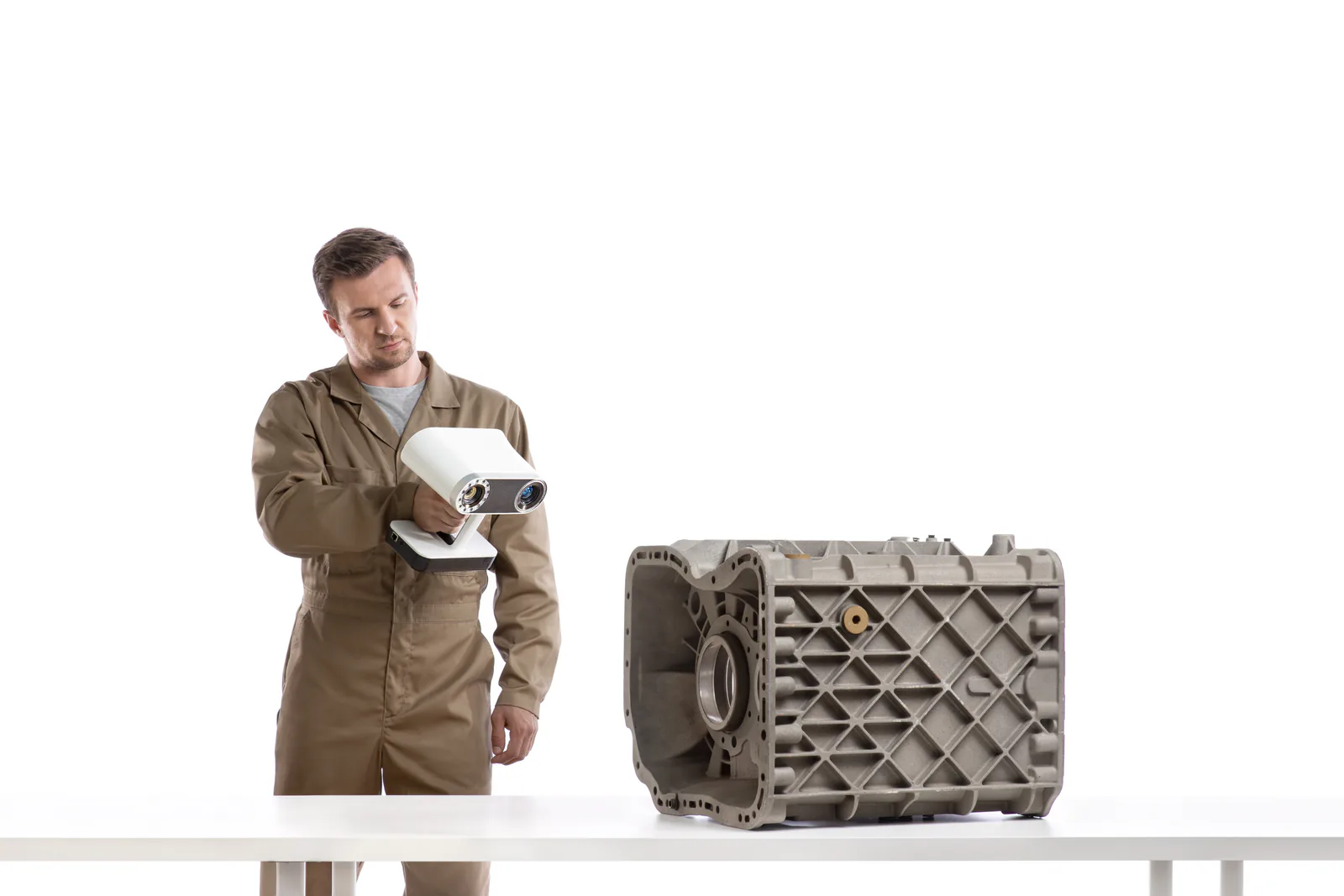
Hulls and decks, the gear below the waterline, the machinery spaces and everything that has to fit inside them. That includes hull and deck sections for repair and refit, propellers, shafts and rudders, engine rooms before a retrofit, cast pump and drive parts, molds and plugs in the shed, and cockpits and cabins for decking and fit-out. The table pairs each with what is usually measured and the scanner class that suits it, from a long-range scan of a whole hull to a metrology scan of a single fitting.
| What we scan | What is checked or rebuilt | Scanner class that suits it |
|---|---|---|
| Hull and deck sections | Shape for repairs, refits and new hardware | Large-part laser handheld or wireless color handheldHandySCAN MAX EVO, Leo |
| Whole hulls and superstructures | Overall form and as-built layout | Tripod LiDARRay II |
| Propellers, shafts and rudders | Blade form, damage and wear | Metrology laser handheld or wireless color handheldHandySCAN EVO, Leo |
| Engine rooms and machinery spaces | Space, mounts and pipe runs for retrofits | Wireless handheld, or an optical CMM scanner in stand-alone modeLeo, MetraSCAN 3D |
| Pump, valve and drive castings | Wear and geometry for spares | Hybrid blue-light or metrology laser handheldNeo, HandySCAN EVO |
| Molds, plugs, cockpits and decks | Mold surfaces, plug shape and fit-out patterns | Large-part laser handheld or color handheldHandySCAN MAX EVO, Leo |
What we scan for marine and shipbuilding
Hull and deck sections
- What is checked or rebuilt
- Shape for repairs, refits and new hardware
- Scanner class that suits it
- Large-part laser handheld or wireless color handheldHandySCAN MAX EVO, Leo
Whole hulls and superstructures
- What is checked or rebuilt
- Overall form and as-built layout
- Scanner class that suits it
- Tripod LiDARRay II
Propellers, shafts and rudders
- What is checked or rebuilt
- Blade form, damage and wear
- Scanner class that suits it
- Metrology laser handheld or wireless color handheldHandySCAN EVO, Leo
Engine rooms and machinery spaces
- What is checked or rebuilt
- Space, mounts and pipe runs for retrofits
- Scanner class that suits it
- Wireless handheld, or an optical CMM scanner in stand-alone modeLeo, MetraSCAN 3D
Pump, valve and drive castings
- What is checked or rebuilt
- Wear and geometry for spares
- Scanner class that suits it
- Hybrid blue-light or metrology laser handheldNeo, HandySCAN EVO
Molds, plugs, cockpits and decks
- What is checked or rebuilt
- Mold surfaces, plug shape and fit-out patterns
- Scanner class that suits it
- Large-part laser handheld or color handheldHandySCAN MAX EVO, Leo
How do marine materials and finishes scan?
Gelcoat, fiberglass, painted steel and aluminum, teak and canvas all scan well when they are clean and dry. The trouble spots are polished: stainless fittings, chrome, polished bronze propellers and high-gloss topsides reflect light, and windows and hatches let it through. Water is the other enemy, since a wet surface shines like a mirror. Dry the area that matters, scan glossy hull paint at an angle or with adjusted settings, and test polished propellers before the job.
Gelcoat and painted hulls
Usually scan well when dry. High-gloss topsides may need adjusted settings or a scanning angle that avoids glare.
Cast bronze and stainless
Cast surfaces scan easily; polished blades and fittings reflect and may need a test or a removable spray.
Teak, canvas and upholstery
Matte and textured, they scan well in shape and color for decking, covers and fit-out patterns.
Wet and salt-crusted surfaces
Water shines and salt hides the real surface. Rinse, dry and then scan the area that matters.
Which marine jobs do we scan most often?
Four: patterning decking and covers to the real shape of a boat, reverse engineering parts that have no CAD, assessing a damaged propeller, and capturing an engine room before new equipment goes in. The first needs coverage and speed more than tolerance; the others need measurable accuracy where parts must fit, so the scanner choice changes with the job. Artec and Creaform each document one of these jobs below.
Decking patterned from a scan
Artec documents how TT Custom Marine scans yacht decks outdoors with the Artec Leo and builds a virtual library of boats, in place of hand-drawn mylar templates.
Racing yacht parts with no CAD
Creaform describes how the American Magic sailing team used a HandySCAN 3D to reverse engineer small parts with no original CAD, and a MetraSCAN 3D to evaluate the foils, deck and rudder.
Propeller assessment
Capture a damaged blade, compare it with the original geometry or a sister blade, and measure what must be restored.
Engine-room retrofit
Record the space, mounts and pipe runs so new equipment is designed to fit the room that exists.
Where does Creaform fit in marine work?
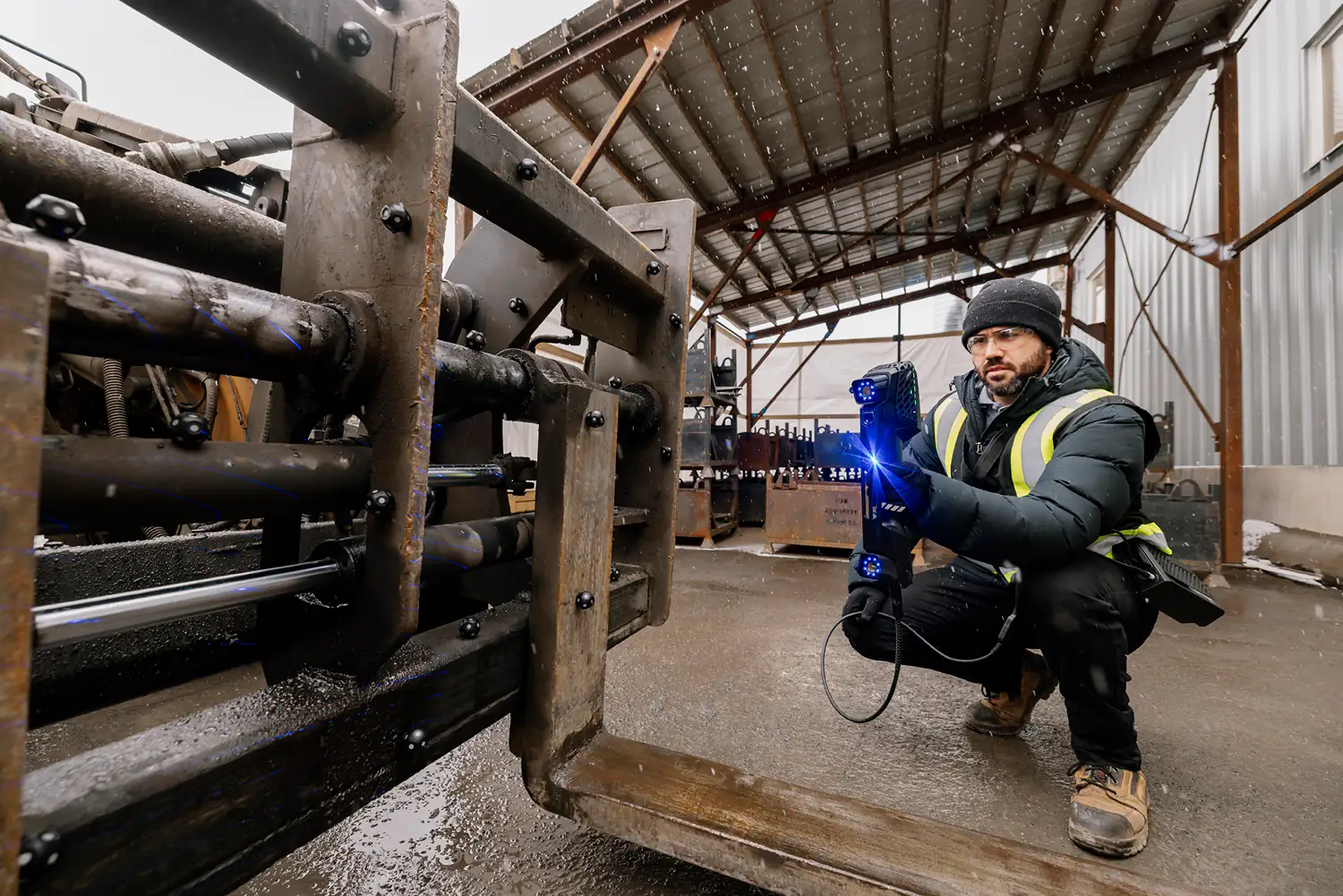
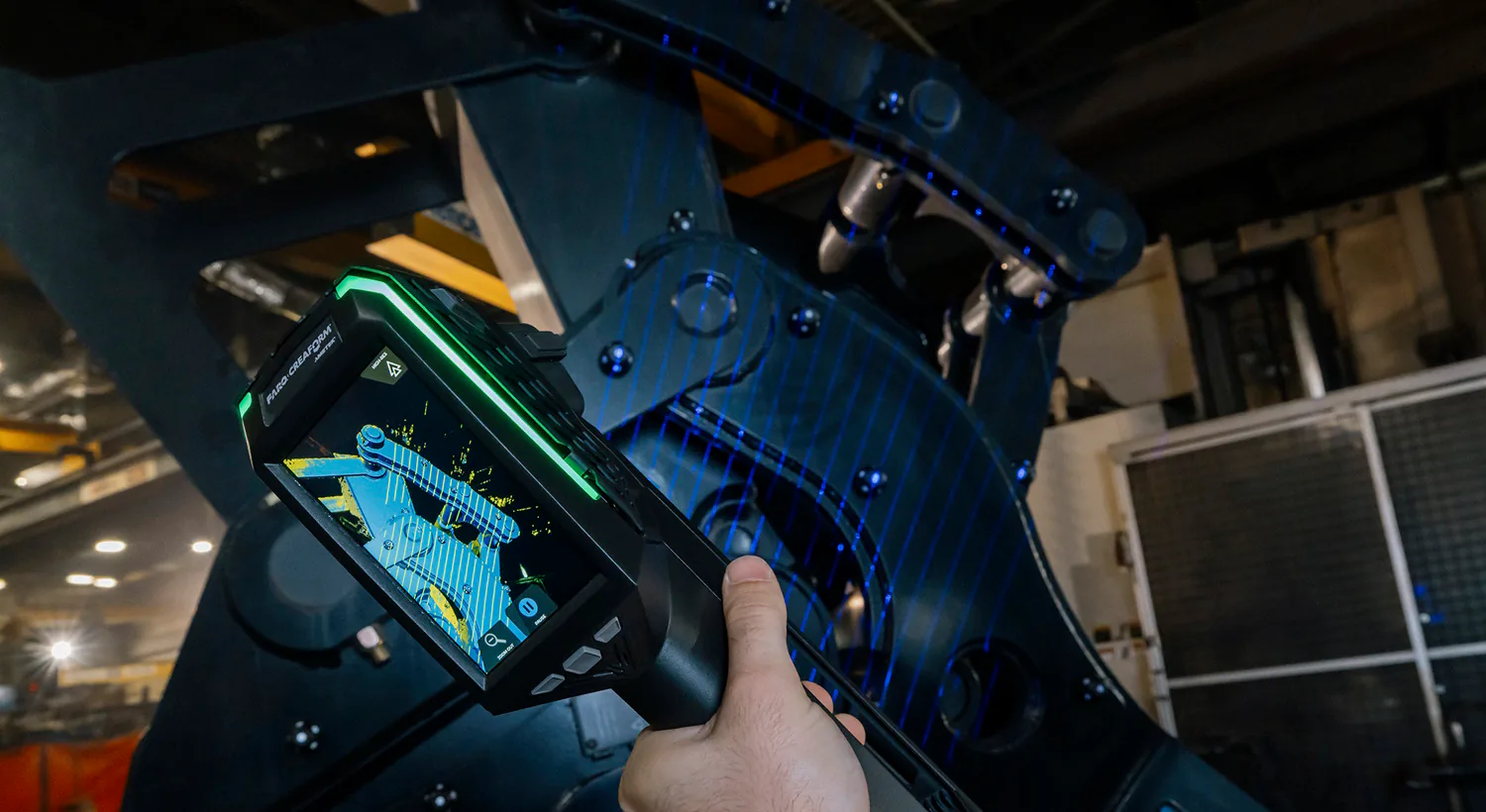
Creaform's strength is metrology on large, curved parts. The HandySCAN MAX EVO covers parts from 1 to 15 m on its Elite model, with frames up to 2.0 × 2.4 m and no surface preparation, and Creaform lists shipbuilding among the MAX Series' industries. With the Mobility Kit it works with no cable to the computer, which helps on a hull or a deck. For engine-room parts, shaft fittings and spares, the HandySCAN EVO brings 0.020 to 0.025 mm accuracy, and the MetraSCAN BLACK2's stand-alone mode scans inside cabins and confined areas where a tracker has no line of sight.
Creaform products named here:
Where does Artec fit in marine work?
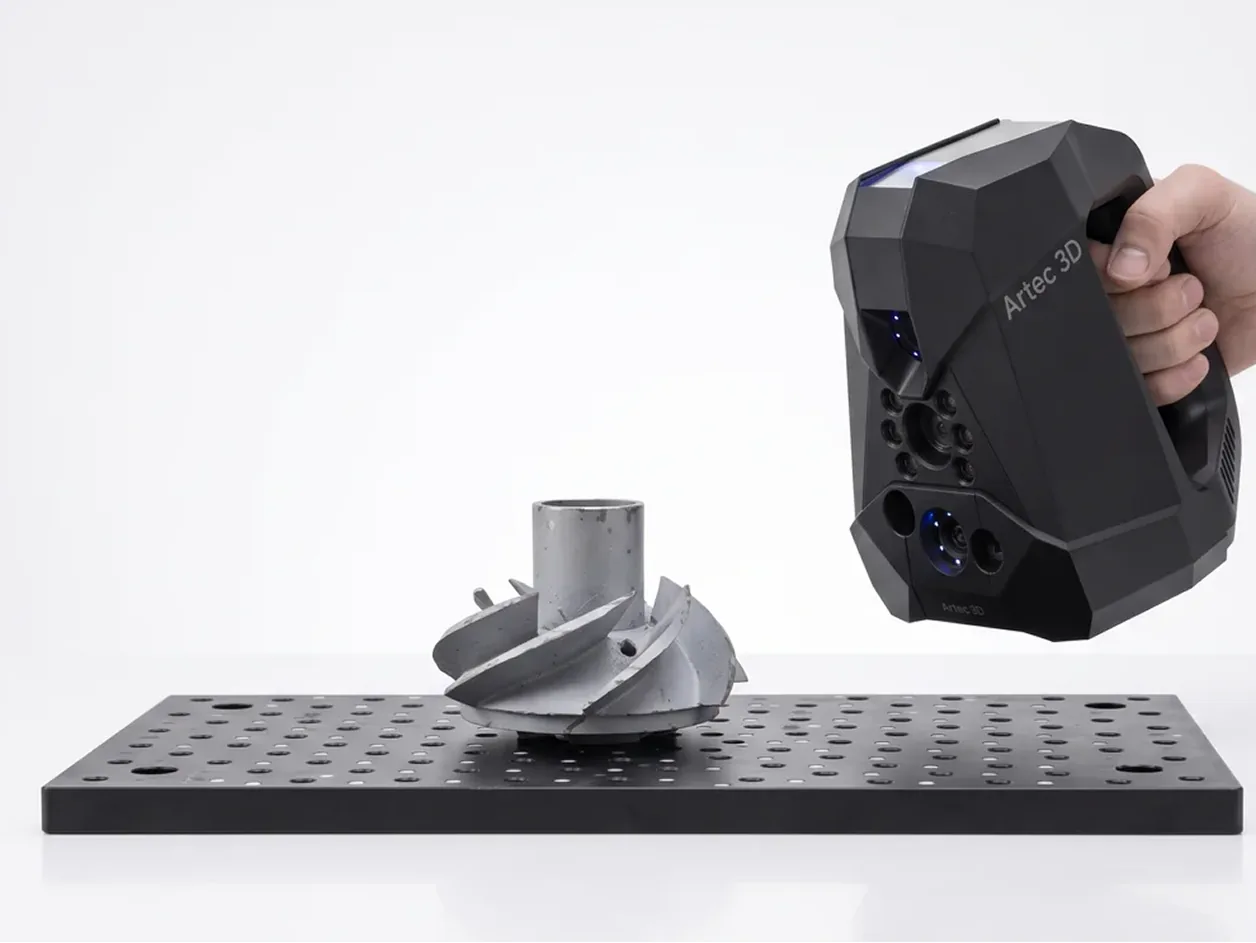
Artec's strength is capturing large curved shapes quickly, outdoors and in color. The Leo is wireless, with its own screen and battery, Artec says it scans in sunlight, and Artec lists ship propellers and small boats among its typical subjects. The Ray II captures a whole hull, a deck or a large propeller from tripod positions, from 0.5 to 130 m, and is rated IP54 for outdoor work. The Neo captures pump impellers and recesses where targets cannot go, with targets only where tolerances matter, and runs on batteries over Wi-Fi.
Artec products named here:
Which scanners are best for marine and shipbuilding?
For marine and shipbuilding, these four scanners are the strongest fits across the Creaform and Artec ranges: HandySCAN MAX EVO, Leo, Ray II and HandySCAN EVO. Each card says why it fits and shows one headline fact taken from the maker's published specifications. They are not ranked against each other, because the right choice depends on the size of what you scan, the accuracy you need and your surfaces. Compare them side by side in the table, then see the one you favor scan your own work before you decide.
Creaform
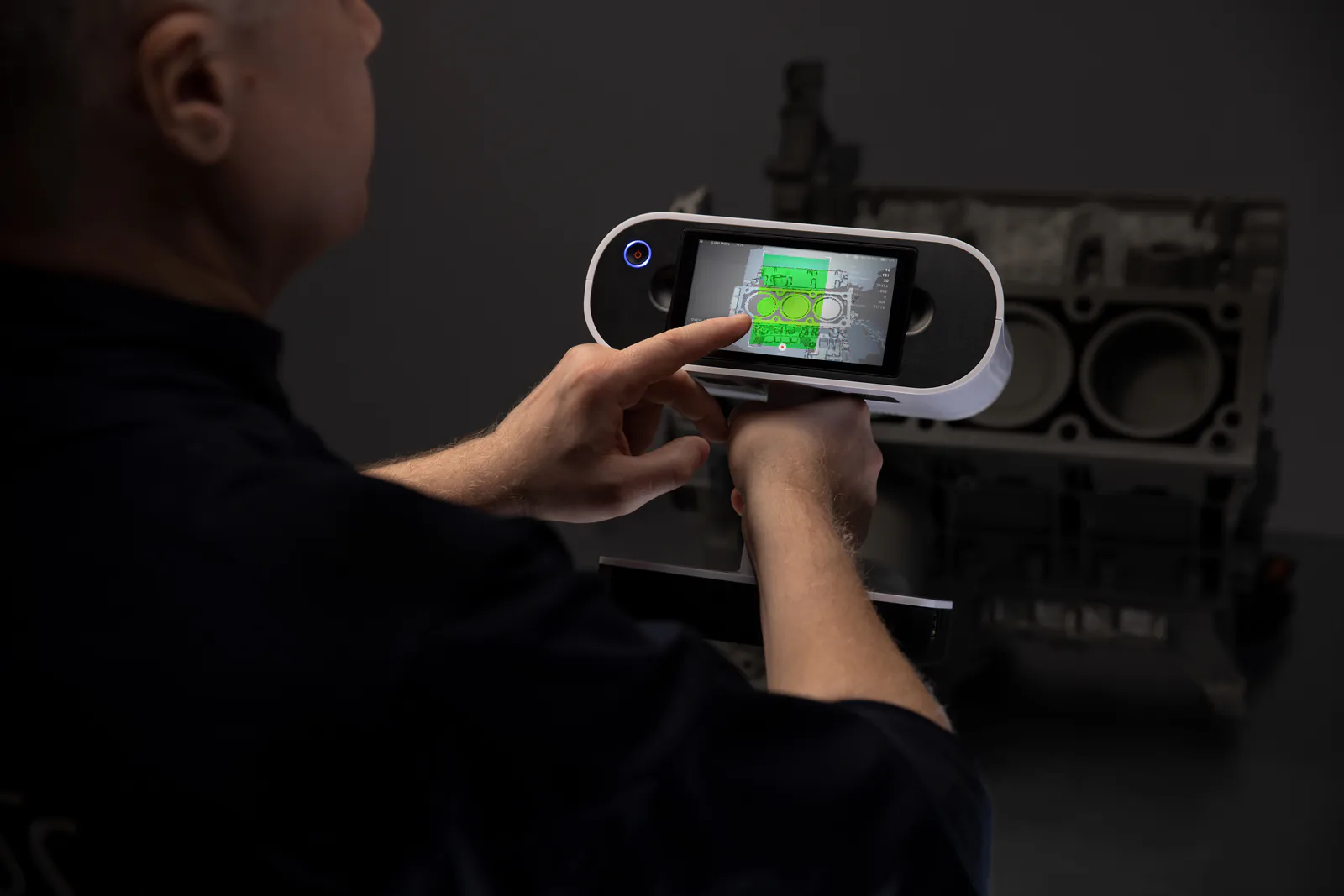
HandySCAN MAX EVO
Handheld blue-laser 3D scanner for large parts
Large curved parts such as hull sections, decks and molds, scanned in place with no surface preparation; wireless with the Mobility Kit.
- Recommended part size
- 1–10 m (MAX EVO); 1–15 m (MAX EVO Elite)
Artec
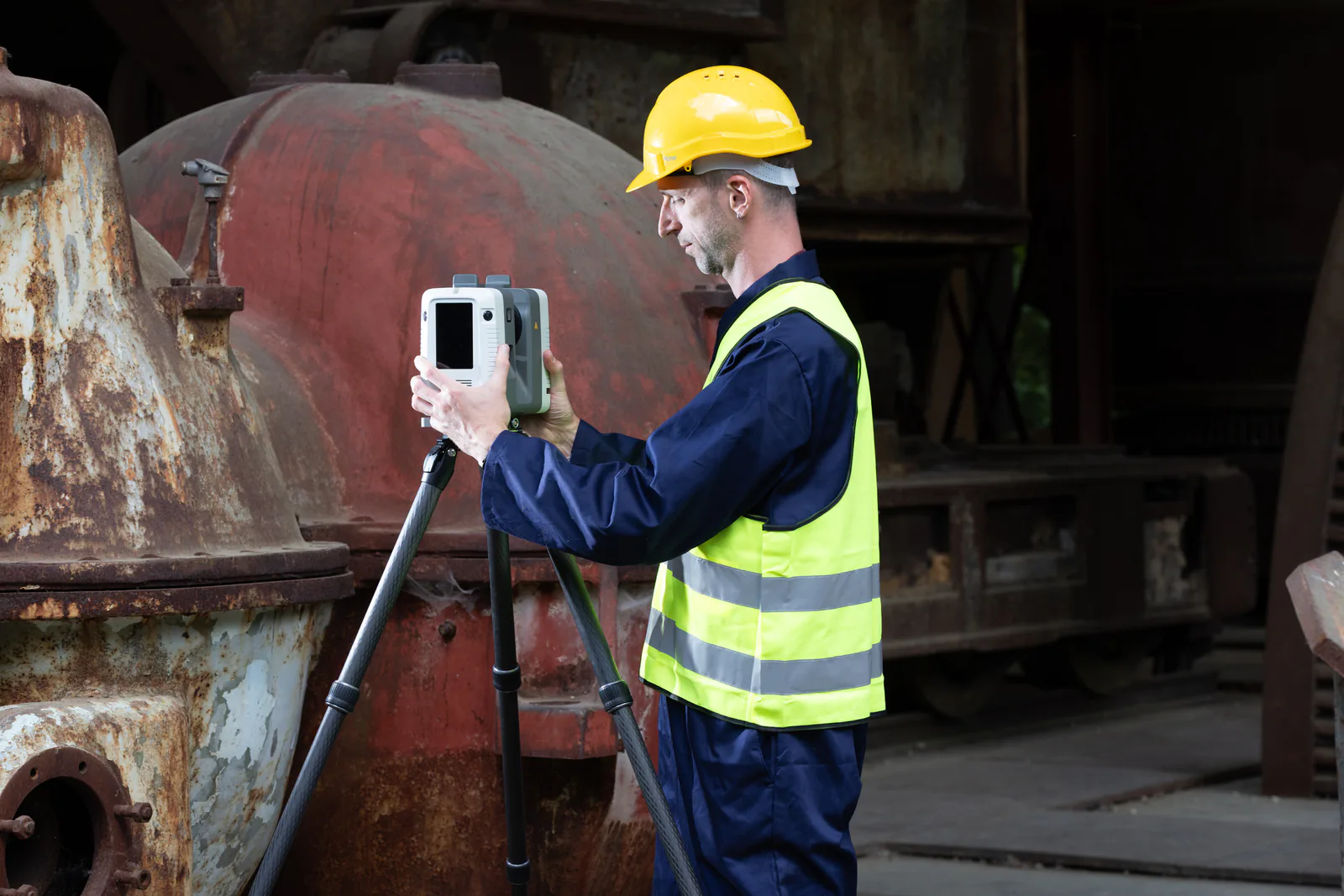
Leo
Wireless handheld 3D scanner with onboard processing
Wireless color capture of decks, cockpits, propellers and small boats, indoors or outside in daylight.
- Wireless operation
- Yes
Artec
Ray II
Tripod-mounted long-range LiDAR scanner
Whole hulls, superstructures and large propellers captured from a tripod, in color and with no targets.
- Working distance
- 0.5–130 m
Creaform
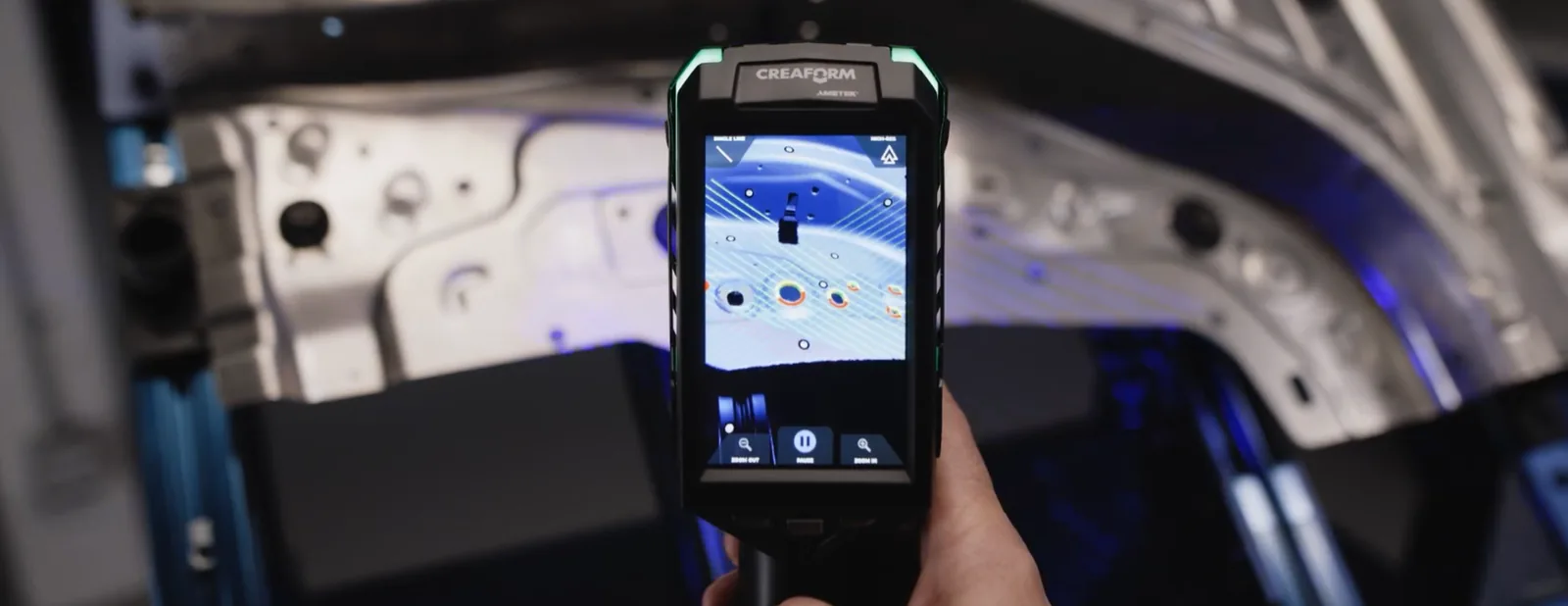
HandySCAN EVO
Handheld metrology-grade blue-laser 3D scanner
Accurate engine-room parts, shaft fittings and spares for CAD rebuilds, with a touchscreen and a wireless option.
- Accuracy
- 0.020–0.025 mm (by model)
| Specification | HandySCAN MAX EVO | Leo | Ray II | HandySCAN EVO |
|---|---|---|---|---|
| Technology | Blue laser triangulation | Structured light (VCSEL) | LiDAR, time of flight with Waveform Digitizing | Blue laser triangulation |
| Accuracy | 0.075–0.150 mm (by model) | Up to 0.1 mm | 1.9 mm @ 10 m; 2.9 mm @ 20 m; 5.3 mm @ 40 m | 0.020–0.025 mm (by model) |
| Recommended part size | 1–10 m (MAX EVO); 1–15 m (MAX EVO Elite) | 0.2–2 m | Range 0.5–130 m (LiDAR) | 0.05–4 m |
| Positioning targets | Required | Not needed | Not needed | Required |
| Color texture | No | Yes | Yes | No |
| Wireless operation | With the Mobility Kit (accessory) | Yes | Yes | With the Mobility Kit (accessory) |
| Weight | 1.28 kg | 2.6 kg | 5.35 kg (nominal, without batteries) | 1.02–1.04 kg (by model) |
Specs checked:
What does a demo on a boat or a ship show?
Pick the job that is hardest to measure today: a hull section, a deck for new hardware or decking, a damaged propeller, or an engine room before a retrofit. We scan it where it sits, in the yard, the shed or the engine room, and show you the mesh, how it compares with any CAD you have, and the path to a new design or a pattern. Tell us about access and whether the boat is in or out of the water. On-site demos are available in most areas; ask when you request.
What else do marine and shipbuilding teams ask?
Can a 3D scanner capture a whole hull?
Yes. The Artec Ray II captures a hull from tripod positions around it, from 0.5 to 130 m, in color and without targets. For metrology accuracy on hull sections and molds, the HandySCAN MAX EVO Elite covers parts from 1 to 15 m, and a MaxSHOT NEXT photogrammetry frame holds accuracy across longer structures.
Can I scan a damaged propeller?
Yes. Artec lists ship propellers among the typical subjects of both the Leo and the Ray II, and a metrology scanner such as the HandySCAN EVO captures blade form and edges in detail. The scan is compared with the original geometry, or with a sister blade, to measure the damage and plan the repair. Polished bronze may need a test scan first.
Can scans be used to make decking and boat covers?
Yes. A wireless color scanner such as the Artec Leo captures the deck, cockpit or seating area as a mesh, and designers draw panels and patterns on the real shape instead of on physical templates. The Leo's stated accuracy of up to 0.1 mm is more than pattern work needs, so speed and coverage matter most, and the Leo needs no cable on deck.
See it measure your hull, deck or engine room
Tell us where the boat is and what has to fit: a hull section, a new deck layout, a damaged propeller or an engine room before a retrofit. We scan it in the yard, in the shed or on board and show you the result. On-site demos are available in most areas; ask when you request.