Skip to content
(816) 608-7745Get pricingBook a demo

CreaformDynamic tracking software module for the C-Track optical tracker

Creaform Dynamic Tracking (VXtrack)

Creaform's module that follows the position and orientation of several objects over time with the C-Track optical tracker.

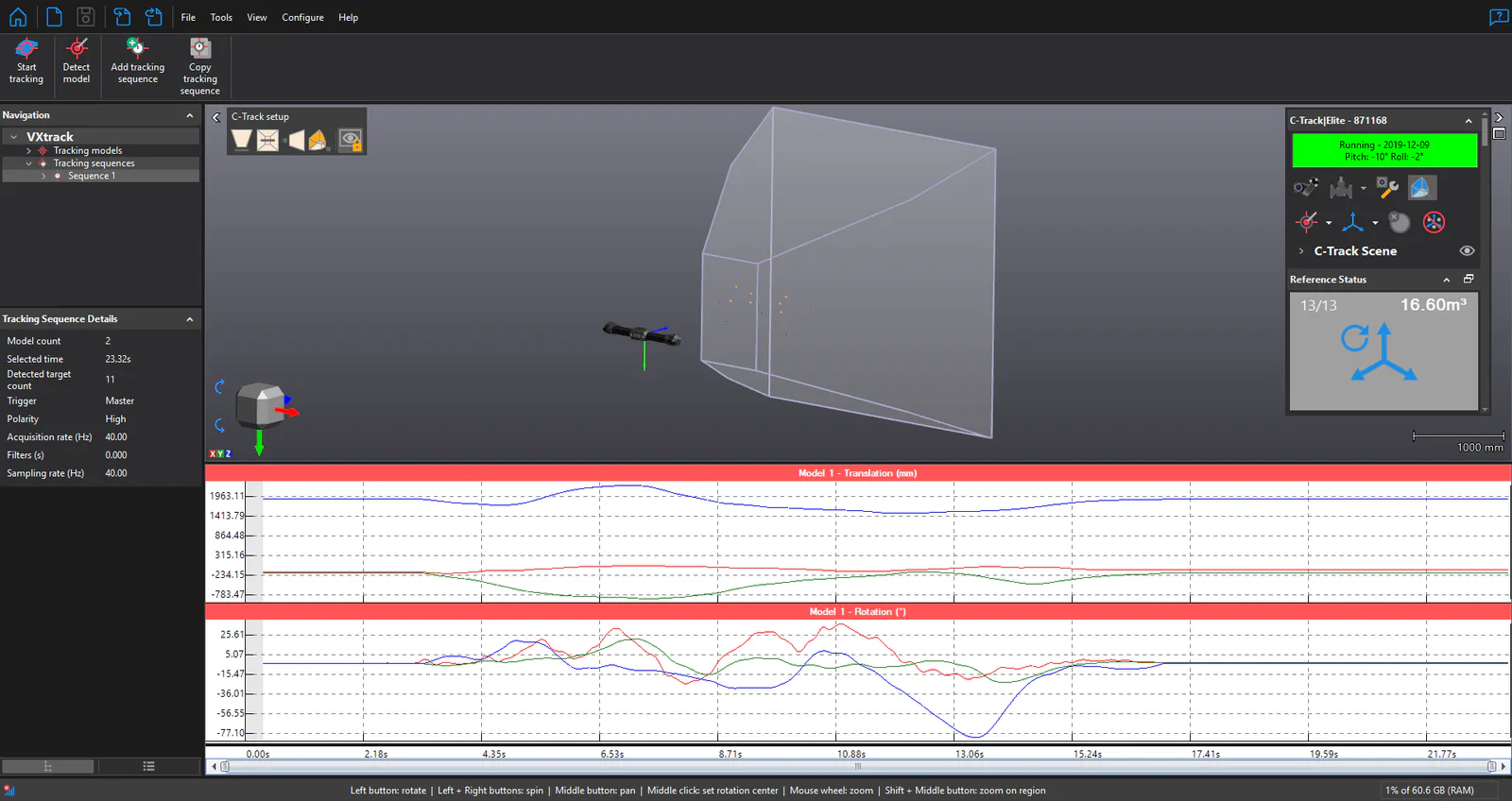
Dynamic Tracking window with the C-Track measuring volume above live translation and rotation curves for one tracked model

Key takeaways

  • Dynamic Tracking is the current name of VXtrack, which Creaform launched with VXelements on September 22, 2010.
  • It measures the position and orientation, six degrees of freedom, of rigid reflector sets on several objects at once.
  • Creaform rates it at up to 6,600 3D points per second in a measuring volume of 9.1 to 16.6 m³.
  • With a C-Track+ Elite, repeatability is 0.010–0.015 mm and volumetric accuracy 0.050–0.075 mm.
  • An API passes the tracking data to third-party applications.

What is Creaform Dynamic Tracking?

Dynamic Tracking is the module of the Creaform Metrology Suite that follows objects while they move. Also known as VXtrack, its name inside VXelements, it uses Creaform's C-Track optical tracker to measure the position and orientation of several objects at once, in 3D space and over time. Each object carries a rigid set of reflectors, and the module records its six degrees of freedom at up to 6,600 3D points per second, then draws the motion as live curves. Engineers use it to control displacements, guide assembly processes and measure deformations, from robot calibration to crash-test preparation. It works with the C-Track, the tracker family that also follows the MetraSCAN 3D and the HandyPROBE.

What can Creaform Dynamic Tracking do?

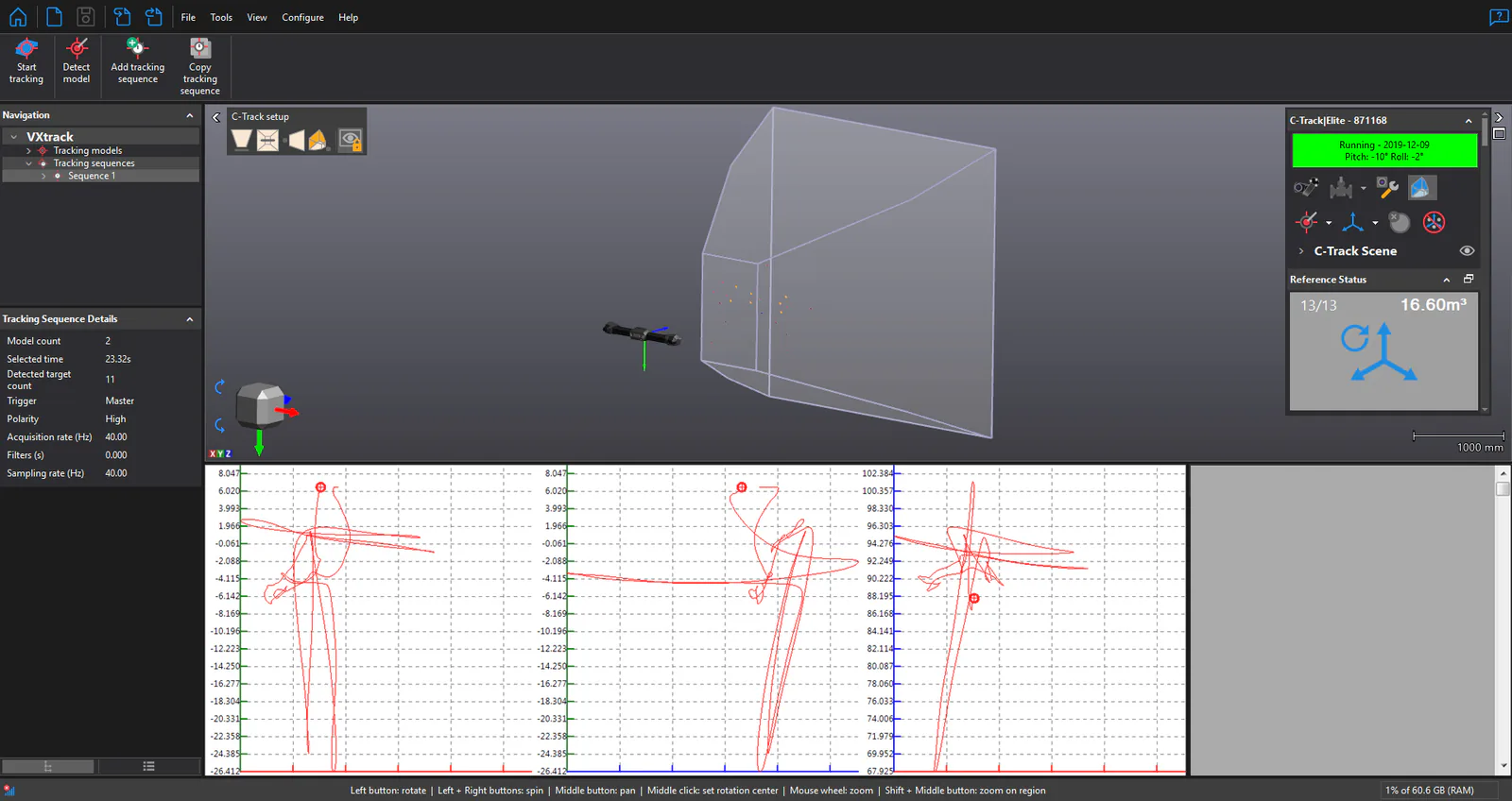
Dynamic Tracking view of the C-Track measuring volume with three plots tracing where a tracked model moved
The three plots trace the path of the tracked model inside the measuring volume during the sequence.

Follow several objects in six degrees of freedom

Each object you follow carries a rigid set of reflectors, and the C-Track measures its position and orientation, all six degrees of freedom, at up to 6,600 3D points per second. Several objects can be tracked at once in a measuring volume of 9.1 to 16.6 m³, so you can compare how a door moves against its frame or a tool against its fixture. The window shows the tracker's view beside the results.
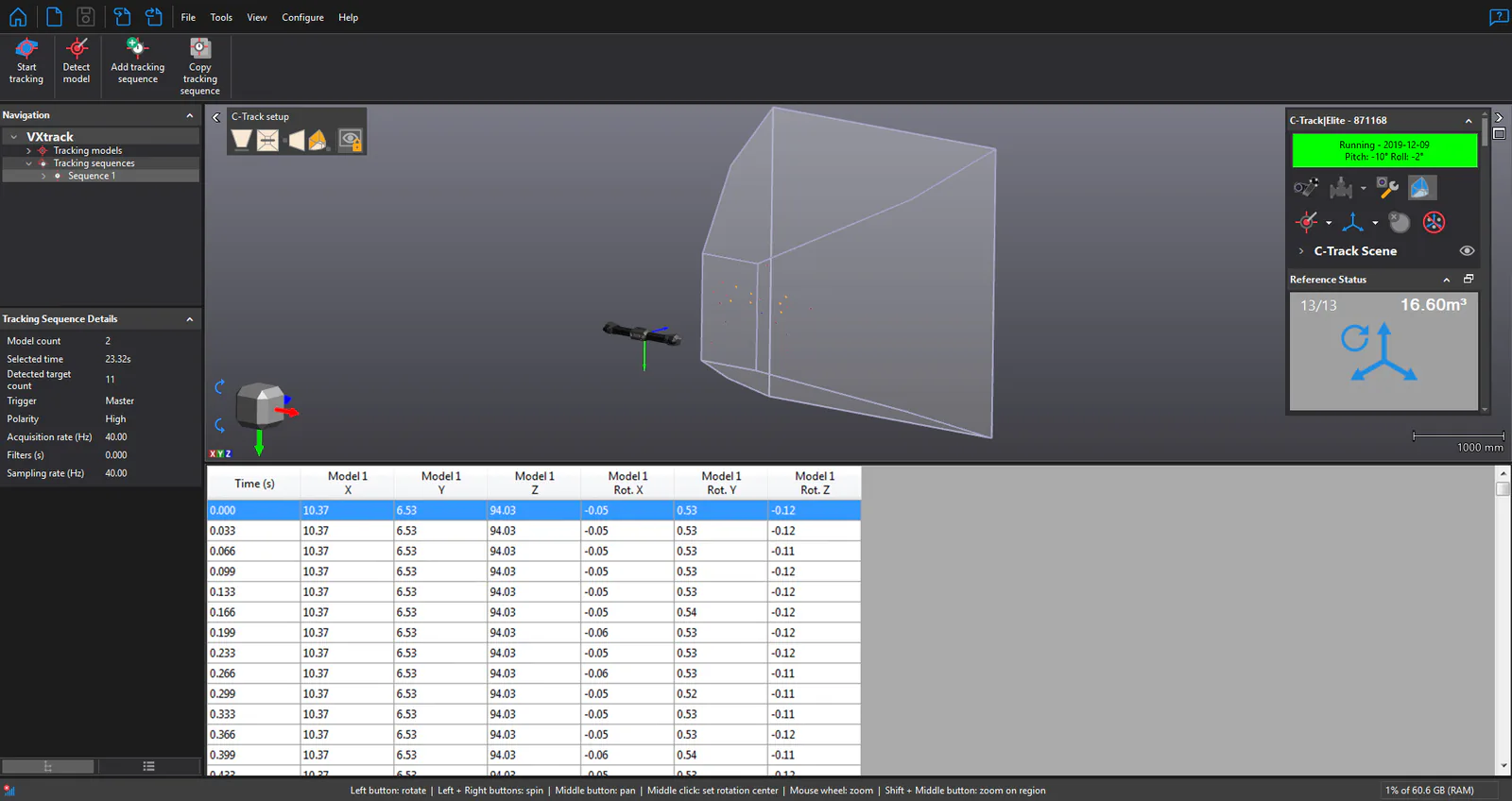
Dynamic Tracking table listing time stamps with X, Y and Z positions and rotations for a tracked model
Every reading keeps its time stamp, so the movement can be reviewed line by line or passed on.

Feed movement data into your process

Dynamic Tracking is meant to sit inside a process, not beside it. Readings are logged with their time stamps in a table you can review line by line, and an API passes the data to third-party applications, so position and orientation can reach the other software in your process. Engineers get direct feedback while the process runs, which speeds up decisions about whether a part, a tool or a fixture is where it should be.

A tracking setup built around your application

Dynamic Tracking is set up around the job rather than the other way round. You define tracking models for the objects you follow, group them into tracking sequences, and choose how results appear: live curves, plots or a table of readings. Creaform describes monitoring multiple objects in 3D space and time as simple and easy with the module, and the interface is kept lean so engineers can start measuring with little training. Our specialists can set up a first sequence with you during a demo.

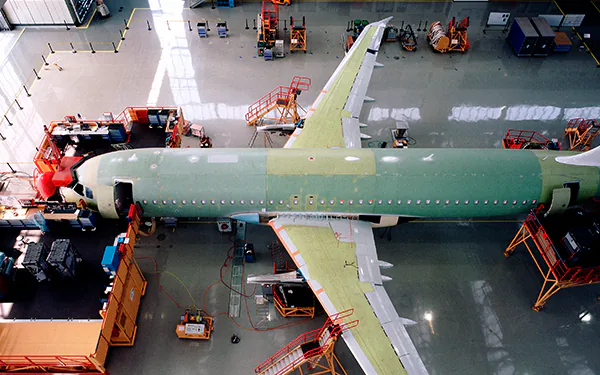
Aircraft fuselage and wings in an assembly hall seen from above, surrounded by work platforms
Large assemblies like this aircraft are where following several reflector sets at once helps most.

Aerospace assembly control and deformation monitoring

Creaform names aerospace first among the module's applications. During assembly, Dynamic Tracking follows sections and fixtures as they come together, so the team can confirm positions before the next operation. During testing, it measures how wings, landing gear and tires deform under load, recording the movement over time rather than one static snapshot. Because every reading carries a time stamp, the motion can be reviewed step by step after the test.

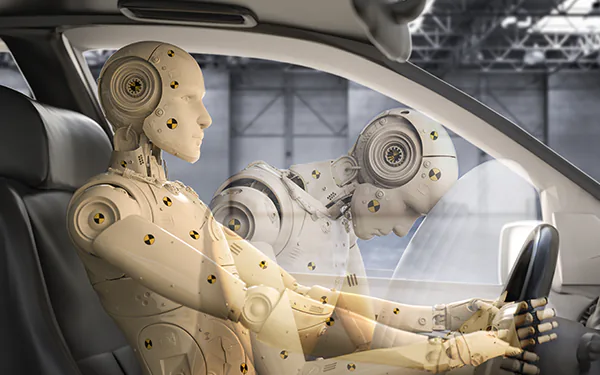
Two crash-test dummies seated in a car interior, one with its hands on the steering wheel
Before a crash test, measured positioning places the vehicle and its occupants the same way every time.

Automotive motion, closures and crash-test preparation

In automotive work, Creaform lists four jobs for Dynamic Tracking: monitoring running parts such as the engine, exhaust and wheels; controlling dynamic processes such as door and hood closing; measuring how chassis and seats deform; and prepositioning for crash tests. In each case the question is how something moves, not only what shape it has, and the module answers it with position and orientation readings over time for every object in view.

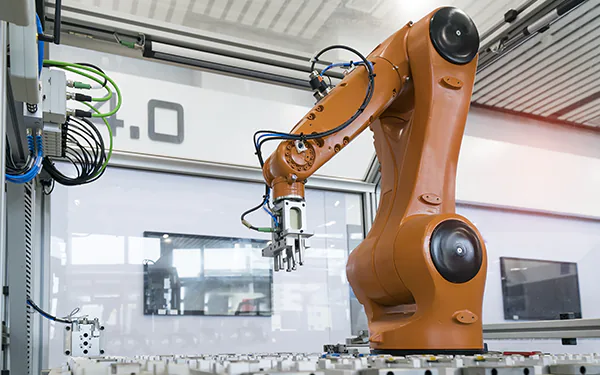
Orange industrial robot arm with a gripper working over a fixture table in an automated cell
A robot like this one can be calibrated on site and corrected while it works, from measured positions.

Robot calibration and real-time course correction

For robotics teams, Creaform lists on-site calibration and assessment, real-time course correction and computerized guidance of assemblies. A reflector set on the robot's tool lets the C-Track measure where the tool really is, so errors in the robot's own positioning can be found and corrected. The same approach applies to machine tools, whose positioning errors the module can track during manufacturing.

What are the key facts about Creaform Dynamic Tracking?

Creaform Dynamic Tracking key facts
Earlier nameVXtrack (VXelements module)
Measurement rateUp to 6,600 3D points/s
Measuring volume9.1 to 16.6 m³
Part ofCreaform Metrology Suite (Scan-to-CAD, Inspection, Automation, Dynamic Tracking)
First releaseSeptember 22, 2010, with VXelements
TrackerC-Track optical tracker; the maker rates the C-Track+ and the C-Track+ Elite
MeasuringPosition and orientation (6 DOF) of a rigid set of reflectors
Repeatability (C-Track+)0.013–0.020 mm
Repeatability (C-Track+ Elite)0.010–0.015 mm
Volumetric accuracy (C-Track+)0.068–0.100 mm
Volumetric accuracy (C-Track+ Elite)0.050–0.075 mm
DisplayReal-time curves of each tracked object
IntegrationAPI for interfacing with third-party applications
Applications named by the makerAerospace, automotive, robotics

Specs checked:

What is Creaform Dynamic Tracking used for?

  • Robot calibration and guidance

    Calibrate and assess robots on site, correct their course in real time and guide assemblies under computer control.

  • Assembly control

    Follow components through a complex assembly to confirm each one stays in position and in tolerance before the next operation.

  • Deformation during testing

    Measure how wings, landing gear, tires, chassis or seats move and deform under real operating conditions.

  • Running parts and closures

    Monitor engines, exhausts and wheels while they run, and the motion of doors and hoods as they close.

  • Crash-test preparation

    Preposition a test vehicle and its occupants with measured position and orientation before a crash test.

  • Machine-tool compensation

    Track machine-tool positioning errors during manufacturing so they can be compensated.

Industries

  • Aerospace
  • Automotive
  • Robotics and automation
  • Manufacturing

What parts and surfaces can Creaform Dynamic Tracking handle?

Dynamic Tracking does not scan surfaces; it follows objects. Anything that can carry a rigid set of reflectors can be tracked, from a robot's tool or a car door to an aircraft wing, a landing gear or a seat under test. Creaform gives a measuring volume of 9.1 to 16.6 m³, so the objects and their motion must stay in the C-Track's view. Several objects can be followed at once, which lets you compare relative motion, such as a hood against the body around it. For the shape of a surface itself, pair the tracker with a MetraSCAN 3D scanner or a HandyPROBE and the Inspection module.

What does Creaform Dynamic Tracking work with?

Dynamic Tracking is one of four application modules in the Creaform Metrology Suite, next to Scan-to-CAD, Inspection and Automation, and it works with the C-Track optical tracker. Creaform's module page still names VXelements for the real-time curve display; current Creaform systems run Creaform.OS, the platform that replaced VXelements in February 2025, so ask us which version your tracker runs. The module measures reflector sets in six degrees of freedom, draws translation and rotation curves live and keeps every reading in a table you can review. An API passes the data to third-party applications, so the results can reach the other software in your process.

How does Creaform Dynamic Tracking compare?

Can I see Creaform Dynamic Tracking work on my own scans?

Often, yes. Tell us you want to see Creaform Dynamic Tracking, and we will confirm whether we can show it at your location. Where we can, our specialist runs it on scans of your own work, so you see how it fits your workflow, from raw scan data to the result you need, before you decide. Pick something you measure often, or a part that has no CAD model, and say what you need to check, rebuild or deliver. On-site demos are available in most areas; ask when you request.

  1. Request a demo and tell us what you scan and which results matter to you.
  2. Where we can show the software at your location, our specialist runs it on scans of that work.
  3. You review the results with us and talk through how it fits your workflow.

What do buyers ask about Creaform Dynamic Tracking?

Is Dynamic Tracking the same as VXtrack?

Yes, it is the current form of it. VXtrack launched with VXelements on September 22, 2010, as the module that added dynamic tracking to Creaform's C-Track. When Creaform relaunched its software as Creaform.OS and the Creaform Metrology Suite in February 2025, the module took the name Dynamic Tracking. Older quotes, manuals and screens still say VXtrack, and the job is the same: following the position and orientation of objects over time.

When should I use Dynamic Tracking instead of a static inspection?

Use it when the position, orientation or movement of an object matters over time. A static inspection compares a part with CAD at one moment; Dynamic Tracking records how components behave during assembly, operation, testing or a manufacturing process. Typical cases are a robot that must follow a path, a door that must close the same way every time, or a wing that deflects under load. If you only need the shape of a finished part, the Inspection module is the better fit.

What hardware does Dynamic Tracking need?

It needs Creaform's C-Track optical tracker and a rigid set of reflectors fixed to each object you follow. Creaform publishes the module's figures for two tracker models, the C-Track+ and the C-Track+ Elite; with the Elite, repeatability is 0.010–0.015 mm and volumetric accuracy 0.050–0.075 mm. The same tracker family follows the MetraSCAN 3D scanner and the HandyPROBE, so a plant that owns either system can ask us whether its tracker supports the module.

Can Dynamic Tracking follow several objects at once?

Yes. Creaform states that the module tracks multiple objects in the measuring volume at the same time, so you can study relative motion and how components interact, such as a hood against the body or a robot tool against a fixture. Each object needs its own rigid set of reflectors. The measuring volume runs from 9.1 to 16.6 m³, so plan the setup so that every object stays in the tracker's view.

Who uses Dynamic Tracking?

Creaform lists manufacturing engineers, automation specialists, robotics teams, test engineers and process engineers who need accurate data on how objects move, deform or interact in real conditions. In aerospace that means assembly control and the deformation of wings, landing gear and tires. In automotive it means running parts, door and hood closing, chassis and seats, and crash-test preparation. In robotics it means on-site calibration, real-time course correction and guided assembly.

How much does Creaform Dynamic Tracking cost?

Dynamic Tracking is quoted as a module for a C-Track system, so the quote depends on what you already own. If you have a MetraSCAN 3D or a HandyPROBE, we start from your tracker and check that it supports the module. If you do not, the quote includes a C-Track, reflector sets for the objects you follow and the software. Add training for the engineers who will run the tests. Tell us what moves and what you need to measure, and we quote the setup that fits.

Request pricing on Creaform Dynamic Tracking

See Creaform Dynamic Tracking work on your own scans

Our specialists can show it on scans of your own work, at your facility. On-site demos are available in most areas; ask when you request. You can also start with a pricing request.

Call (816) 608-7745